Why Responsible Tyre Disposal Matters for Construction Companies
Construction projects rely heavily on vehicles, machinery, and equipment.
From excavators and loaders to trucks and utility vehicles, tyres play a critical role in daily operations.
However, when these tyres reach the end of their lifespan, construction companies face an important question:
How should waste tyres be managed responsibly?
Proper tyre disposal is not only an environmental responsibility but also an important part of maintaining safe and compliant construction operations.
Why Construction Sites Generate Large Volumes of Waste Tyres
Construction equipment operates in demanding environments that accelerate tyre wear.
Common causes include:
- Heavy loads
- Rough terrain
- Long operating hours
- Harsh weather conditions
- Continuous equipment use
As a result, construction businesses regularly replace tyres throughout the year.
Without a disposal plan, waste tyres can quickly accumulate on-site.
Risks of Improper Tyre Disposal
Many businesses underestimate the risks associated with discarded tyres.
Common Risks Include:
- Fire hazards
- Environmental pollution
- Illegal dumping
- Site safety concerns
- Water contamination
- Regulatory issues
Large tyre stockpiles can become costly liabilities if not managed properly.
Benefits of Professional Tyre Recycling
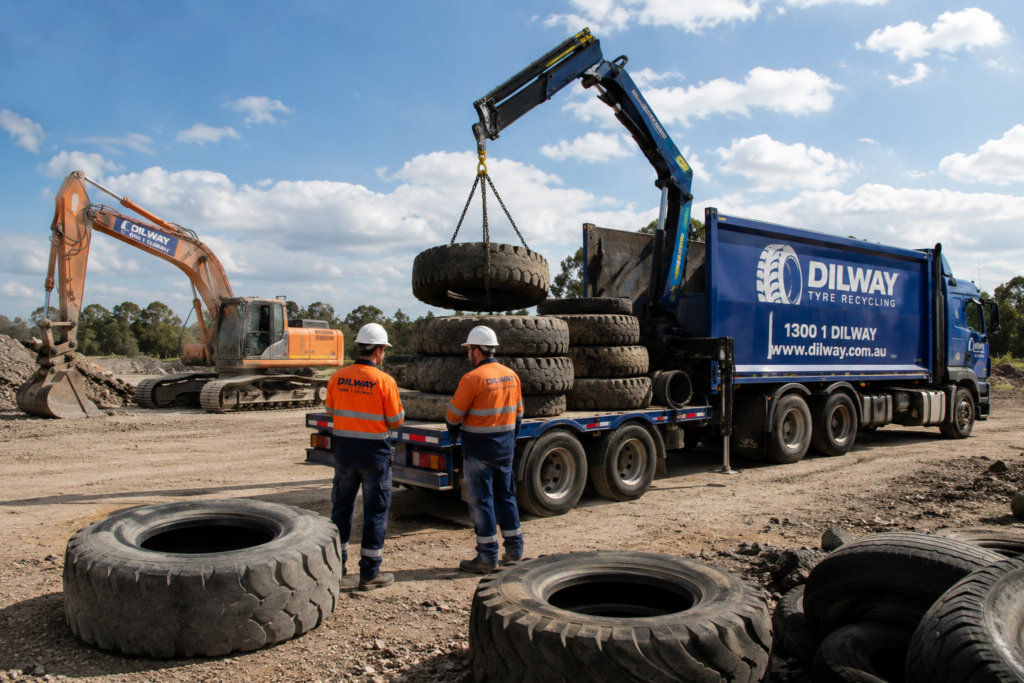
Professional recycling providers help construction companies manage waste tyres efficiently.
Improved Site Safety
Removing unused tyres helps:
- Reduce trip hazards
- Improve site organization
- Minimize fire risks
- Create safer work environments
Better Environmental Performance
Responsible recycling helps reduce:
- Landfill waste
- Pollution risks
- Illegal dumping
- Resource wastage
This supports sustainable construction practices.
Compliance Support
Professional recycling services help businesses:
- Meet environmental obligations
- Maintain waste management records
- Reduce regulatory risks
- Support sustainability reporting
What Happens to Construction Tyres After Collection?
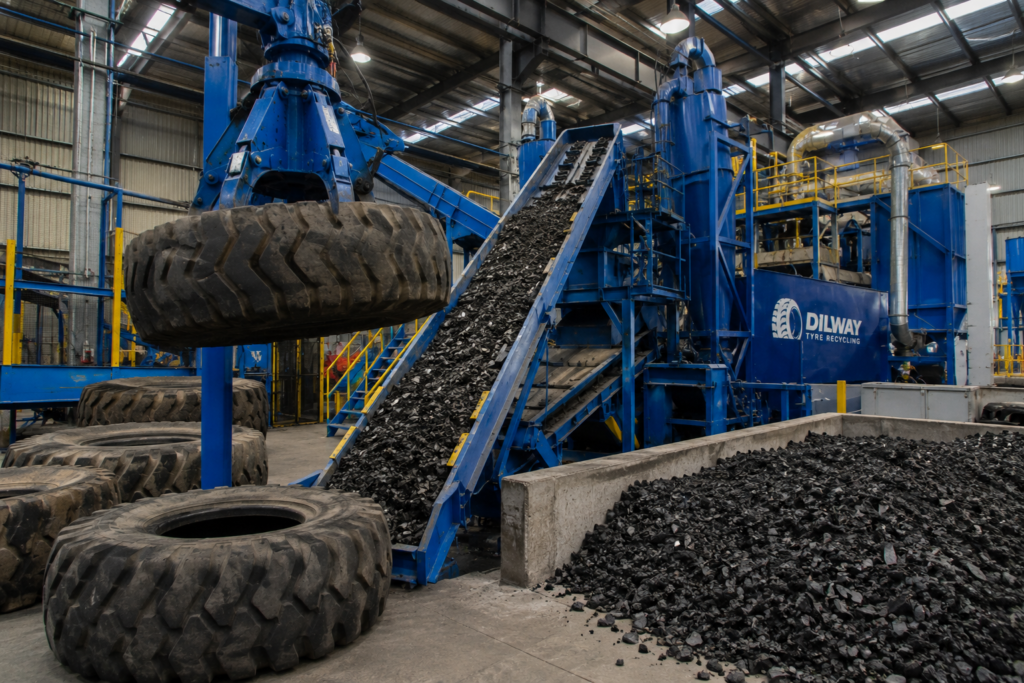
Collected tyres are processed through modern recycling facilities.
The process generally includes:
- Collection
- Inspection
- Sorting
- Shredding
- Steel separation
- Rubber recovery
Recovered materials are then reused across various industries.
Applications include:
- Road construction
- Playground surfaces
- Sports facilities
- Industrial flooring
- Construction materials
Supporting Sustainable Construction
Sustainability is becoming a major priority across Australia’s construction sector.
Key focus areas include:
- Waste reduction
- Resource recovery
- Circular economy initiatives
- Environmental compliance
- ESG performance
Responsible tyre recycling helps construction companies contribute to these goals.
Choosing the Right Tyre Recycling Partner
When selecting a recycling provider, businesses should consider:
Key Considerations
- Industry experience
- Reliable collection services
- Environmental compliance
- Recycling capabilities
- Transparent reporting
- Proven track record
A trusted recycling partner can help ensure tyres are managed responsibly from collection through final processing.
The Future of Construction Waste Management
As environmental expectations continue to grow, construction companies are increasingly adopting sustainable waste management practices.
Responsible tyre disposal will remain an important part of reducing environmental impact while supporting operational efficiency.