Why You Should Never Send Tyres to Landfill (And What to Do Instead)
For Australian businesses that handle vehicles, tyres are an unavoidable part of day-to-day operations. Workshops, tyre retailers, transport companies, fleet operators and other commercial businesses can quickly accumulate large quantities of worn or damaged tyres. The challenge is knowing what to do with them once they can no longer be used.
Understanding why tyres should not go to landfill is important because old tyres are not ordinary waste. They are bulky, combustible and made from materials such as rubber, steel and textiles that can be recovered and reused. Sending them to landfill can create unnecessary environmental and waste-management problems while also losing valuable recyclable materials.
Fortunately, businesses have a more responsible alternative. With proper storage, collection and recycling, end-of-life tyres can be processed into useful materials such as rubber crumb, granules and other recycled products. This guide explains the risks of landfill disposal and what Australian businesses can do instead.
Why Shouldn’t Tyres Go to Landfill?
At first, putting unwanted tyres into landfill might appear to be a simple disposal solution. Once the tyres leave your premises, however, the waste-management challenge does not necessarily disappear.
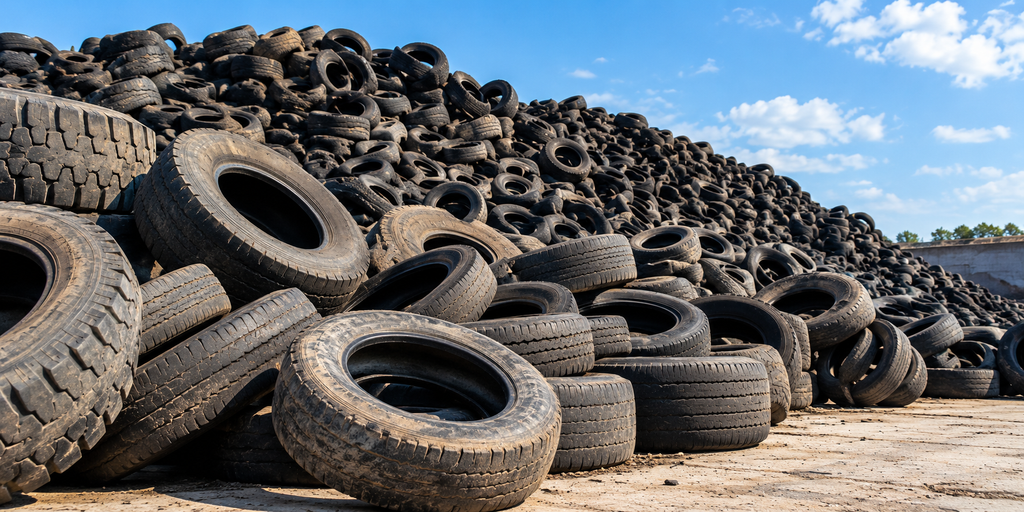
Whole tyres have characteristics that make them difficult to manage in landfill environments. They are large, durable and contain considerable empty space. Their shape can also make them difficult to compact effectively compared with other waste materials.
More importantly, tyres are combustible.
EPA Victoria identifies waste tyres as combustible waste and notes that tyre fires can be difficult to extinguish and may continue for extended periods. The agency also states that tyre fires can produce thick, black smoke containing particles and chemicals that can create risks to human health and the environment.
For businesses, this means waste tyres should be treated as a dedicated waste stream rather than simply mixed with general commercial rubbish.
The Environmental Impact of Tyres Goes Beyond Landfill Space
When discussing the environmental impact of tyres, landfill space is only part of the issue.
A waste tyre contains materials that can potentially be recovered and processed for another use. Rubber can be turned into recycled rubber products, while steel can be separated during processing and directed into appropriate recycling streams.
If tyres are sent unnecessarily to disposal instead, those resources are effectively removed from the recycling cycle.
Tyre Fires Are a Serious Risk
Large quantities of poorly managed tyres can present a significant fire hazard.
A tyre fire is not comparable to an ordinary rubbish fire. The composition and structure of tyres can make fires difficult to control, while the resulting smoke can create health and environmental concerns.
This is one reason responsible waste tyre management includes appropriate storage, avoiding unnecessary stockpiling and arranging collection before quantities become difficult to manage.
EPA Victoria also regulates the management, storage, transport and disposal of waste tyres and identifies specific duties for businesses involved in managing waste tyres.
Valuable Materials Can Be Recovered
Tyres are not simply disposable rubber products.
Through appropriate processing, rubber and steel can be recovered from end-of-life tyres. Depending on the recycling process, the rubber may be converted into different particle sizes for use in manufacturing, construction, landscaping, sports surfaces and other applications.
This makes recycling a more resource-efficient approach than treating every end-of-life tyre as material destined for disposal.
What Is a Tyre Landfill Ban in Australia?
The term tyre landfill ban is sometimes used as though there is one identical national rule covering every Australian business. In reality, waste-management requirements can vary between states and territories.
Businesses therefore need to understand the rules that apply to their location, the quantity of tyres they handle and how those tyres are being managed.
Victoria provides a useful example. EPA Victoria states that burning or dumping waste tyres is an offence and that waste tyres are classified as reportable priority waste under Victorian regulations. Businesses involved in generating, transporting or receiving waste tyres can have specific obligations under the state’s environmental protection framework.
This means businesses should not assume that a landfill accepting general commercial waste is automatically an appropriate destination for whole waste tyres.
Instead, the safer approach is to separate waste tyres and arrange an appropriate collection and recycling pathway.
Why Whole Tyres Are Particularly Unsuitable for Landfill
There are several practical reasons why whole tyres are better suited to recycling than landfill disposal.
1. They Occupy Significant Space
A tyre has a large internal cavity and a relatively low weight compared with its physical size. Large quantities can therefore occupy substantial space without providing any meaningful benefit to landfill operations.
Processing tyres into smaller materials can improve handling and allow useful components to be recovered.
2. They Can Create Fire Management Problems
Tyres are combustible, making large accumulations a potential fire-management concern.
For businesses, preventing unnecessary stockpiling is therefore important. A scheduled collection service can help workshops, tyre retailers and fleet operators keep waste tyre quantities under control.
3. They Contain Recoverable Materials
Rubber and steel do not necessarily need to become waste.
Recycling gives these materials an opportunity to be processed and used again. This supports a more circular approach to resource management and reduces reliance on disposal.
4. They Are Bulky to Transport and Store
Whole tyres are awkward to stack, handle and transport. As quantities increase, storage areas can quickly become crowded.
A planned collection schedule makes it easier to manage the physical space required for end-of-life tyres and maintain a cleaner, safer working environment.
What Happens When Waste Tyres Are Recycled?
Once collected, end-of-life tyres can go through a series of processing stages designed to recover useful materials.
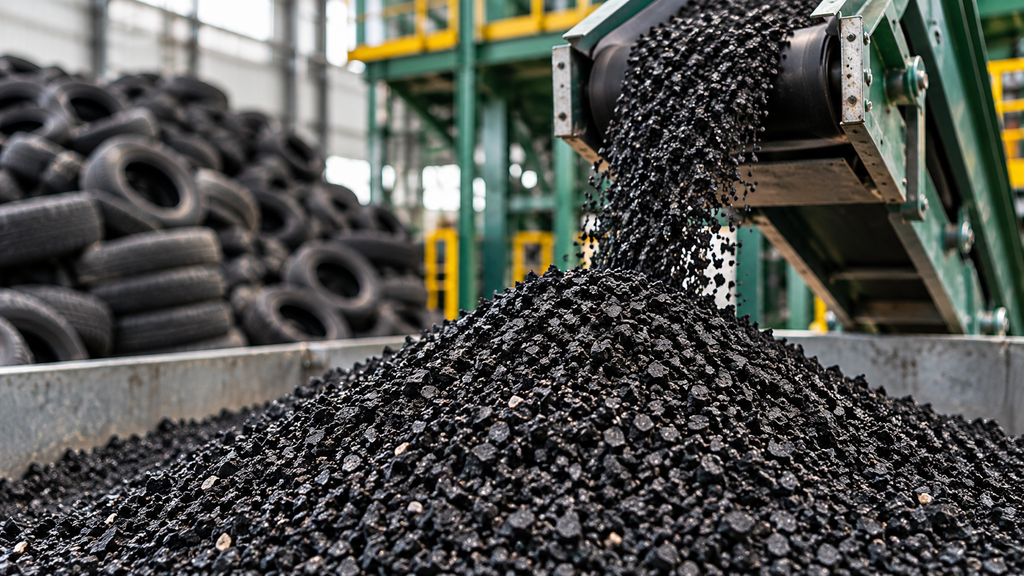
The exact process depends on the recycling facility and the intended end use, but common recycled tyre outputs include rubber crumb, rubber granules and finer rubber products.
Rubber Crumb
Rubber crumb is produced by processing waste tyres into smaller rubber particles.
Depending on its specifications, recycled rubber crumb can be used in applications such as sports surfaces, playground products, flooring, landscaping and manufactured rubber products.
Businesses interested in the material recovery side of tyre recycling can explore rubber crumb and granules to understand how processed tyre rubber can become a useful commercial material.
Rubber Granules
Rubber granules are larger particles of processed tyre rubber and can be used in a range of commercial and industrial applications.
The size and specifications required can vary according to the final application, which is why proper processing and quality control are important.
Premium Rubber Powder
Further processing can produce finer rubber material for applications that require smaller particle sizes.
The ability to process tyres into different material forms demonstrates why end-of-life tyres should not automatically be viewed as a disposal-only waste stream.
Recovered Steel
Steel components within tyres can also be separated during recycling.
Recovering steel alongside rubber allows more of the original tyre to be diverted into productive material streams.
What Should Businesses Do Instead of Sending Tyres to Landfill?
For businesses generating waste tyres regularly, the alternative to landfill is not complicated. It starts with separating the waste stream and establishing a consistent collection and recycling process.
1. Separate Waste Tyres From General Waste
Keep end-of-life tyres separate from general commercial waste wherever practical.
This makes it easier to monitor quantities and arrange an appropriate collection service.
2. Avoid Unnecessary Stockpiling
Do not allow tyres to accumulate indefinitely.
A workshop or tyre retailer can quickly go from having a manageable pile of waste tyres to having a large stockpile that requires additional space and management.
Regular collection can help prevent this buildup.
3. Store Tyres Responsibly
While waiting for collection, tyres should be stored in a manner that reduces potential risks.
Businesses should consider factors such as:
- Fire prevention
- Site access
- Drainage
- Stockpile size
- Separation from other materials
- Protection from unauthorised dumping or movement
Requirements can vary depending on the state and the quantity being stored, so businesses should check the applicable environmental requirements.
4. Choose an Appropriate Recycling Provider
Not every waste collection service handles tyres in the same way.
Before choosing a provider, businesses should ask how the tyres will be collected, transported and processed.
Useful questions include:
- Where will the tyres be taken?
- Are they processed for recycling?
- What materials are recovered?
- What documentation is provided?
- How is the waste tracked?
- Does the provider operate in accordance with applicable environmental requirements?
For businesses in Melbourne and surrounding areas, tyre recycling and collection services provide one example of a dedicated approach to managing commercial waste tyres.
5. Keep Appropriate Records
Good record keeping can make commercial waste management much easier.
Businesses should retain relevant collection records, invoices, waste documentation and reports provided by their waste management provider.
This can help demonstrate how waste tyres have been handled and support internal environmental and compliance processes.
What About Waste Tyre Exports?
Recycling does not necessarily mean that every processed tyre material remains in Australia.
Australia has a federal regulatory framework for certain waste exports, including waste tyres. The Australian Government states that waste tyre exports have been regulated since 1 December 2021 under the Recycling and Waste Reduction Act 2020 and the Recycling and Waste Reduction (Export Waste Tyres) Rules 2021.
The rules distinguish between different forms of waste tyres and processed tyre materials. For example, eligible processed materials such as crumb, granules and certain shreds may be exported where the applicable requirements are met and the exporter holds the required licence. Whole baled tyres and tyres in pieces larger than 150 mm cannot be exported under the standard waste tyre export rules.
For businesses, the important takeaway is that responsible tyre management involves more than simply moving old tyres away from a premises. The collection, processing and final destination all form part of the waste-management chain.
Why Documentation Matters
For a small workshop, a handful of worn tyres may not seem like a major waste-management issue.
For a tyre retailer, transport company, fleet operator or large commercial site, however, tyre volumes can quickly reach hundreds or even thousands of units.
At that scale, documentation becomes increasingly useful.
A well-managed process should allow a business to establish:
- How many tyres were collected.
- When the collection took place.
- Who collected or transported them.
- Where the tyres were taken.
- How they were processed.
- What documentation was issued.
This level of visibility can make it easier to manage internal records and demonstrate responsible waste practices when required.
Recycled Tyres Can Become Useful Commercial Materials
One of the strongest arguments for recycling is that end-of-life tyres can become inputs for another product or application.
Recovered tyre rubber can be used in areas such as:
- Sports and recreational surfaces
- Playground products
- Rubber flooring
- Landscaping applications
- Construction products
- Manufacturing
- Artificial turf systems
- Other rubber-based products
The exact application depends on the characteristics and specifications of the recycled material.
Instead of viewing the tyre as something that has reached the end of its usefulness, recycling allows businesses to see it as a source of recoverable material.
This is the basic principle behind sustainable tyre disposal: managing waste in a way that prioritises recovery and reuse wherever practical.
A Practical Waste Tyre Checklist for Australian Businesses
Before arranging your next waste tyre collection, ask:
- Are our waste tyres separated from general waste?
- Are they being stored safely?
- Are we preventing unnecessary stockpiling?
- Do we know where the tyres are being taken?
- Will the tyres enter an appropriate recycling pathway?
- Will we receive suitable collection and waste documentation?
- Are we following the requirements applicable in our state or territory?
- Can useful rubber and steel be recovered from the tyres?
If the answer to these questions is yes, your business is taking a more structured approach to waste tyre management.
Frequently Asked Questions
Why should tyres not go to landfill?
Tyres are bulky and combustible and contain materials such as rubber and steel that can be recovered through recycling. Sending them unnecessarily to landfill can create additional waste-management and environmental concerns.
Is there a tyre landfill ban in Australia?
Waste tyre requirements vary between Australian states and territories. Businesses should check the rules that apply to their location rather than assuming whole tyres can be disposed of through a general landfill.
What is the environmental impact of tyres?
Poorly managed waste tyres can create fire risks and contribute to unnecessary resource loss. Recycling allows materials such as rubber and steel to be recovered for further use.
What is sustainable tyre disposal?
Sustainable tyre disposal involves collecting, processing and recycling end-of-life tyres through an appropriate waste-management pathway rather than unnecessarily sending recoverable material to landfill.
Can waste tyres be recycled?
Yes. Waste tyres can be processed into materials including rubber crumb, rubber granules and rubber powder, while steel can also be recovered during processing.
Conclusion
Understanding why tyres should not go to landfill is an important part of responsible commercial waste management in Australia. For businesses that generate waste tyres, the practical alternative is to separate them from general waste, store them appropriately, arrange regular collection and ensure they enter a suitable recycling pathway.
Instead of allowing old tyres to become a growing disposal problem, businesses can help recover valuable materials and support a more resource-efficient approach to tyre management. With the right process in place, end-of-life tyres can become useful recycled materials rather than simply another waste stream.