What Happens to Your Tyres After Collection? Inside the Recycling Process
Every year, Australian businesses generate thousands of waste tyres through vehicle servicing, fleet operations, transport, construction and other commercial activities. Once those tyres are collected, however, their journey is far from over. Instead of simply disappearing from your workshop, warehouse or business premises, they can enter a series of processing stages that turn an end-of-life tyre into useful recycled material.
So, what happens to tyres after recycling begins? The answer involves much more than simply cutting tyres into smaller pieces. Depending on the recycling process and the intended end product, tyres may be sorted, shredded, separated, granulated and processed into rubber crumb, granules or finer rubber powder.
For Australian businesses, understanding the tyre recycling process explained in practical terms can make it easier to choose responsible disposal options and understand where their waste goes. It also shows why proper collection, processing and documentation are important parts of responsible end-of-life tyre management.
What Happens to Tyres After Collection?
Once waste tyres leave a business, they typically enter a structured processing chain rather than going directly into another product.
The exact process can vary depending on the facility, equipment and intended application. However, commercial tyre recycling generally involves several key stages:
- Collection and transportation
- Sorting and inspection
- Shredding
- Steel separation
- Fibre and contaminant removal
- Granulation
- Rubber crumb production
- Further processing into specialised recycled rubber products
Each stage helps recover useful materials from a tyre that would otherwise become difficult-to-manage waste.
Australia has also placed increasing emphasis on recovering resources from end-of-life tyres. The Australian Government currently includes tyres on its Product Stewardship Priority List, with product stewardship intended to increase resource recovery and recycling.
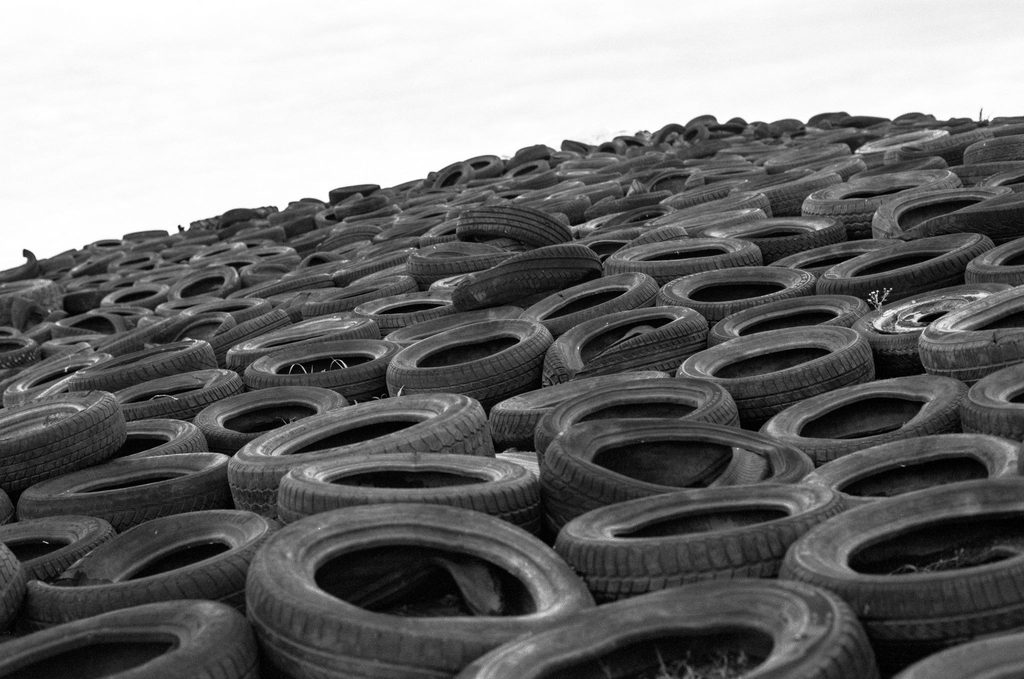
Step 1: Tyres Are Collected and Transported
The recycling journey begins when waste tyres are collected from businesses such as tyre retailers, automotive workshops, fleet operators and other commercial sites.
For a business, this stage may appear straightforward: old tyres are loaded onto a collection vehicle and removed from the premises. Behind the scenes, however, proper collection and transport are important because large volumes of tyres can quickly occupy valuable storage space.
Responsible collection also provides a clear transition between the business generating the waste and the recycling facility receiving it.
For businesses managing regular tyre volumes, working with a provider that offers scheduled collection can help make waste management more predictable.
Step 2: Tyres Are Sorted Before Processing
After collection, tyres are assessed and sorted before entering the main processing equipment.
Sorting can help identify differences in tyre type, size and condition. Tyres intended for different recovery routes may require different handling.
This stage can also help identify material that should be managed separately. Effective sorting improves processing efficiency and helps ensure that the right material enters the appropriate recycling stream.
For commercial waste generators, this is one reason why simply finding somewhere to leave old tyres is not the same as ensuring they enter a genuine recycling process.
Step 3: Shredding Breaks Tyres Into Smaller Pieces
Whole tyres are difficult to process because they contain several tightly bonded materials.
Industrial shredders use heavy-duty machinery to cut tyres into smaller pieces. This significantly reduces their size and makes the different components easier to separate during later stages.
The result is generally a shredded tyre material containing rubber along with steel reinforcement and textile fibres.
The size of the shredded material can vary according to the equipment and the requirements of the next processing stage.
Shredding is therefore an important part of end of life tyre processing because it transforms a bulky whole tyre into a more manageable feedstock.
Step 4: Steel Is Separated From the Rubber
A typical passenger or commercial vehicle tyre is not made from rubber alone. Steel reinforcement is incorporated into the tyre structure to provide strength and durability.
During recycling, this steel needs to be separated from the rubber.
Mechanical separation systems can recover steel from the shredded tyre material. The recovered steel can then enter its own recycling stream rather than remaining mixed with the rubber.
This separation is important because recycled rubber needs to be progressively cleaned and refined before it can be used in many applications.
Step 5: Textile Fibres and Other Materials Are Removed
Tyres can also contain textile or fibre reinforcement.
After shredding and initial separation, processing equipment can remove much of this material from the rubber stream. Additional separation and screening help improve the cleanliness and consistency of the recovered rubber.
The objective is to progressively move from a mixture of tyre components toward a more refined rubber material.
This is where the recycling process starts to look very different from simple tyre shredding. The aim is not merely to reduce tyre size, but to recover materials that can be used again.
Step 6: Shredded Rubber Is Granulated
After the initial shredding and separation stages, the rubber can be processed into smaller and more consistent particles.
This stage is commonly referred to as granulation.
The rubber is reduced into granules of controlled size, depending on the processing equipment and the requirements of the final application.
Particle size matters because different recycled rubber applications require different material characteristics.
For example, coarser rubber granules may be suitable for some construction, landscaping or sports applications, while finer material can be used where a more consistent particle size is required.
Step 7: Rubber Crumb Production Creates a Reusable Material
One of the important outputs of tyre recycling is rubber crumb.
Rubber crumb is produced by mechanically processing waste tyres into smaller rubber particles after the major non-rubber components have been separated.
The final particle size can vary depending on the intended use and processing requirements.
Businesses and manufacturers can use recycled rubber materials in a variety of applications. Australian Government data identifies markets for recovered tyre materials including road construction additives, playground flooring, sports surfaces and retaining walls.
For buyers looking for recycled rubber materials, understanding this process provides useful context about how waste tyres can become a resource.
You can explore recycled rubber crumb and granules and the types of applications they can support.
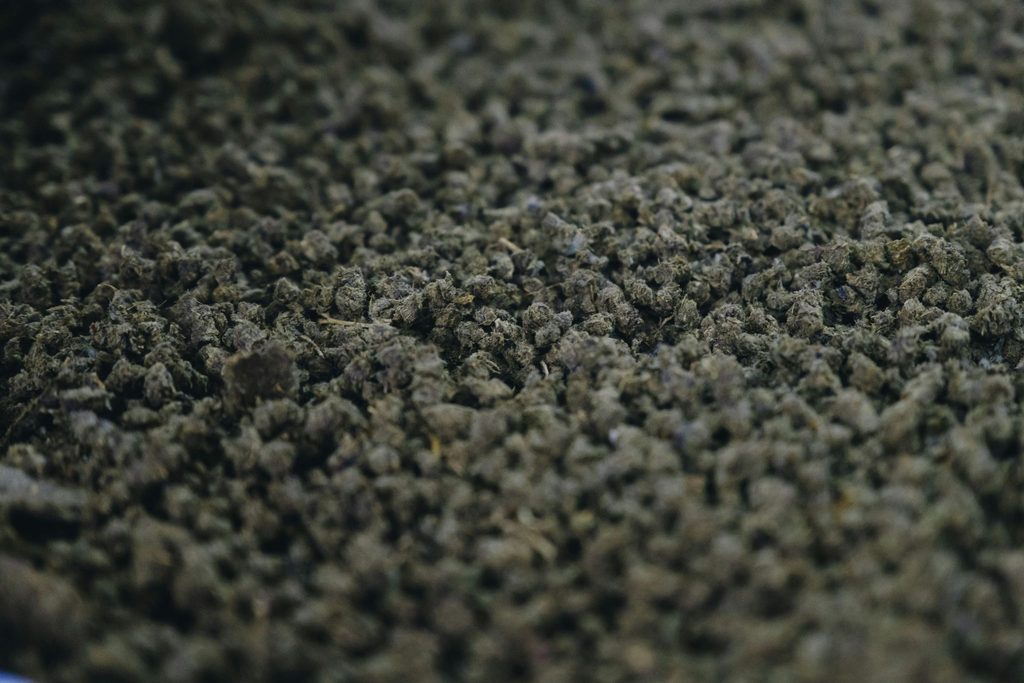
Step 8: Some Rubber Can Be Processed Into Fine Rubber Powder
Further processing can reduce recycled rubber into an even finer material.
Rubber powder is produced when rubber particles undergo additional size reduction and refinement. The exact characteristics of the finished powder depend on the processing method and intended application.
This demonstrates why tyre recycling is not a single process with one final product.
A waste tyre can potentially become several different recycled materials, depending on how it is processed and what the recovered material is intended for.
What Do Recycled Tyres Become?
One of the most common questions about tyre recycling is what happens to the material once the original tyre is broken down.
Recycled tyres can become materials used in:
- Playground surfaces
- Sports surfaces
- Road construction applications
- Landscaping products
- Construction materials
- Industrial applications
- Rubber-based products
- Tyre-derived fuel in regulated applications
The Australian Government reports that onshore tyre processing is mostly focused on recycling, with recovered tyre materials finding markets in applications such as road construction, playground flooring, sports surfaces and retaining walls.
This is an important distinction. Recycling does not mean that an old tyre simply becomes another complete tyre. Instead, its constituent materials are recovered and processed for suitable applications.
How Long Does It Take for a Rubber Tyre to Decompose?
Tyres are designed to be durable, which is useful when they are fitted to vehicles but creates a challenge when they reach the end of their useful life.
Unlike materials that break down relatively quickly, tyres can persist for long periods when they are discarded rather than recovered.
For this reason, responsible end-of-life management is important for businesses generating significant quantities of waste tyres.
Recycling provides an alternative route by recovering materials instead of leaving tyres as long-term waste.
The Australian Government’s waste policy also recognises tyre recycling as part of broader product stewardship efforts aimed at increasing resource recovery and developing markets for tyre-derived products.
What About Old or 20-Year-Old Tyres?
The age of a tyre does not automatically determine whether it can enter a recycling stream.
A very old tyre may no longer be suitable for road use, but that does not necessarily mean the material has no recovery value.
For businesses, the important point is that tyres removed from vehicles because they are worn, damaged or otherwise unsuitable for continued use should be directed through an appropriate end-of-life pathway.
Whether a particular tyre can be reused, retreaded, recycled or managed through another recovery route depends on its condition and the applicable requirements.
Recycling therefore gives businesses another option beyond simply storing old tyres indefinitely.
Why Australian Businesses Should Look Beyond Collection
For an auto workshop or tyre retailer, collection is only one part of responsible waste management.
The more important question is: Where do the tyres go after they leave the premises?
Australia regulates the export of waste tyres under the Recycling and Waste Reduction Act 2020 and the Recycling and Waste Reduction (Export – Waste Tyres) Rules 2021. The rules place requirements around which waste tyres can be exported and how they must be processed.
This makes traceability increasingly important for commercial waste generators.
Businesses should look for a recycling provider that can explain what happens after collection and provide appropriate documentation for their records.
Why Waste Tracking Matters
Waste tracking is particularly important for businesses that need to demonstrate responsible waste management.
A collection record can help show that tyres were removed from a business, but more complete documentation can provide greater visibility into the disposal or recycling pathway.
For companies with environmental, compliance or internal reporting requirements, this information can also make audits and record-keeping easier.
A responsible tyre recycling provider should be able to explain its collection process, processing pathway and documentation clearly.
What Should Businesses Ask Their Tyre Recycling Provider?
Before arranging regular tyre collection, businesses can ask a few straightforward questions.
1. Where are the tyres processed?
Ask whether the provider can explain where and how the tyres are processed after collection.
2. What materials are recovered?
A genuine recycling process should involve recovery of useful materials such as rubber, steel and other components where applicable.
3. What happens to the recycled rubber?
Understanding the final applications of recovered rubber provides greater transparency about the recycling pathway.
4. Can you provide waste documentation?
For commercial businesses, appropriate documentation can help with internal records, compliance requirements and audits.
5. Is the recycling operation appropriately accredited or approved?
Businesses should consider the relevant environmental and industry requirements when selecting a provider.
These questions are particularly useful when comparing providers because they move the conversation beyond collection price and toward the complete waste management process.
A Simple Tyre Recycling Process Explained
At a basic level, the tyre recycling process explained looks like this:
Collection → Sorting → Shredding → Steel Separation → Fibre Removal → Granulation → Rubber Crumb → Further Processing
Each stage has a specific purpose.
Collection moves tyres away from the business generating the waste. Sorting prepares them for processing. Shredding reduces their size, while separation removes steel and fibre. Granulation then produces more consistent rubber particles, which can be further processed into crumb, granules or finer rubber products.
The result is a material that can potentially return to the economy through a range of applications rather than remaining as discarded tyre waste.
Practical Takeaways for Australian Businesses
If your business regularly generates waste tyres, there are several simple things you can do to improve the way they are managed:
- Avoid allowing waste tyres to accumulate unnecessarily on-site.
- Use a planned collection schedule if your business generates tyres regularly.
- Ask where collected tyres are processed.
- Check what documentation is provided after collection.
- Understand whether the provider actually recycles the material.
- Consider the end use of recovered rubber where relevant.
- Keep collection and waste records for your business.
- Choose a provider that can clearly explain its processing and compliance practices.
For businesses looking for a structured collection and recycling pathway, commercial tyre collection and recycling can help move waste tyres from the point of generation toward responsible processing.
Frequently Asked Questions
What happens to recycled tyres?
Waste tyres can be sorted, shredded and separated into their main components. The recovered rubber can then be processed into materials such as rubber crumb, granules and finer rubber products for various applications.
How long does it take for a rubber tyre to decompose?
Tyres are highly durable and can persist for many years when discarded. Recycling provides a way to recover their materials instead of relying on natural decomposition.
Is it safe to use 20-year-old tyres?
A 20-year-old tyre may no longer be appropriate for vehicle use, depending on its condition and other factors. However, its age does not automatically prevent the tyre from being considered for recycling or another appropriate end-of-life pathway.
What do recycled tyres become?
Recycled tyres can become rubber crumb, granules and other recovered rubber materials. These materials can be used in applications including sports surfaces, playground flooring, construction and road-related products.
What is the tyre recycling process?
The process generally involves collection, sorting, shredding, separation of steel and fibre, granulation and further processing of the recovered rubber into usable materials.
Conclusion
The journey of a waste tyre does not have to end when it is removed from a vehicle. Through proper collection, processing and material recovery, tyres can be transformed into useful recycled rubber products and other resources. For Australian businesses, understanding what happens to tyres after recycling makes it easier to choose a disposal pathway that supports responsible waste management, resource recovery and better environmental outcomes.