How Much Does Tyre Disposal Cost for Australian Businesses?
For an Australian business, getting rid of waste tyres is rarely as simple as finding a price per tyre. A local workshop might generate a steady stream of passenger tyres, while a transport company could deal with large truck tyres in much higher volumes. A council, fleet operator or industrial business may have completely different collection requirements again.
So, what does tyre disposal cost Australia businesses? There is no single price that applies across the country. The final cost can depend on the number and type of tyres, collection location, transport requirements, site access, collection frequency and how the tyres are processed after collection.
Understanding these factors can help businesses compare quotes more accurately. Instead of focusing only on the cheapest collection price, it makes sense to look at the complete service: collection, transport, recycling, compliance and documentation.
What Determines Tyre Disposal Cost in Australia?
Commercial tyre disposal pricing is usually influenced by several factors rather than one fixed rate.
A recycling provider has to consider the practical work involved in collecting the tyres, transporting them, processing the material and managing the recovered rubber and other components.
The main factors typically include:
- Number of tyres
- Overall tyre volume
- Tyre type and size
- Collection location
- Distance and transport requirements
- Frequency of collection
- Site access and loading conditions
- Processing requirements
- Compliance and waste-tracking requirements
These factors can work together. A large tyre retailer in a metropolitan area may have a very different collection cost from a small regional business with a smaller but less accessible load.
That is why businesses should provide accurate information when requesting a quote rather than relying on a generic online price.
1. How Many Tyres Do You Need Collected?
Volume is one of the first things a recycling provider will want to know.
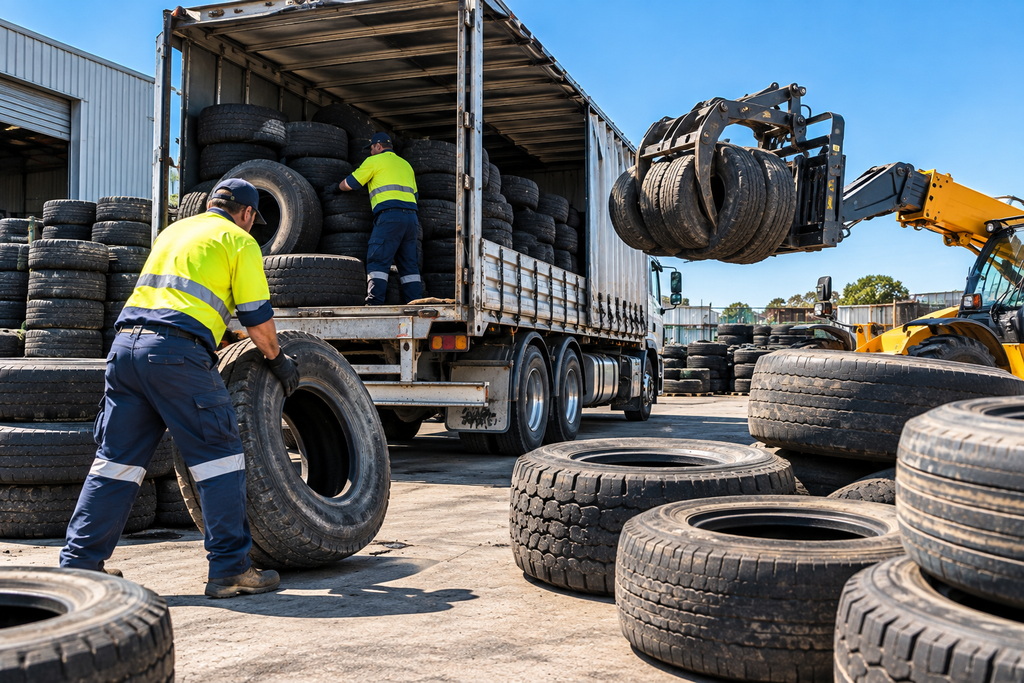
A workshop producing 30 or 40 waste tyres each month has different collection requirements from a tyre retailer handling several hundred tyres a week. Likewise, a fleet operator may generate large quantities at regular intervals but from several different locations.
The number of tyres affects loading, vehicle capacity, handling time and transport efficiency. In some cases, larger volumes can make a scheduled collection more practical because the collection vehicle can carry a substantial load from one location.
However, businesses should not assume that storing tyres for as long as possible will automatically reduce their disposal costs.
Large tyre stockpiles can create operational and safety issues, particularly where tyres are stored outdoors or in poorly managed areas. The NSW EPA, for example, highlights fire-safety considerations around waste-tyre storage and requires waste tyres to be managed responsibly.
Regular collections can make planning easier
If your business generates waste tyres consistently, a scheduled collection may be easier to manage than waiting until the storage area is full.
A regular collection arrangement can also make costs more predictable. When requesting a quote, give the provider an approximate number of tyres generated each week or month and explain whether that volume is consistent.
The more accurate the information, the more useful the quote is likely to be.
2. What Type of Tyres Are Being Collected?
A tyre is not simply a tyre when it comes to commercial recycling.
Passenger vehicle tyres, truck tyres, agricultural tyres, earthmoving tyres and other specialist tyres can differ significantly in size, weight and handling requirements.
A business dealing mainly with standard passenger tyres may therefore have different collection requirements from a fleet operator handling large commercial tyres.
Tyre Stewardship Australia’s product stewardship scheme covers a broad range of tyre categories, while the Australian Government continues to identify tyres as a priority product for stewardship action.
Why tyre size matters
Larger tyres can take up considerably more space and may require different handling arrangements.
When requesting commercial tyre disposal pricing, tell the provider what types of tyres you have rather than simply providing a total number.
For example:
- Passenger car tyres
- 4WD and SUV tyres
- Truck and bus tyres
- Agricultural tyres
- Earthmoving tyres
- Forklift tyres
- Other specialist or oversized tyres
If you have a mixed load, mention that as well.
This helps the provider understand the collection requirements before preparing the quote.
3. Where Is Your Business Located?
Location is another major consideration when calculating tyre disposal cost Australia businesses may encounter.
Transport is not just about the distance between two points. It can involve vehicle requirements, driver time, fuel, loading, unloading and route planning.
A business located in central Melbourne, Sydney or Brisbane may have very different transport requirements from a regional or remote operation.
For businesses with multiple sites, location becomes even more important. A fleet operator might have depots across several cities, while a tyre retailer may need regular collections from several workshops.
The provider may need to consider whether individual locations should be collected separately or incorporated into a broader schedule.
For Melbourne businesses, for example, Dilway provides tyre collection and recycling across metropolitan Melbourne and regional Victoria.
Businesses can therefore provide their exact collection location when requesting a quote rather than assuming a standard metropolitan rate applies everywhere.
4. How Often Do You Need Tyre Collection?
Collection frequency can also influence the overall economics of the service.
Some businesses need a one-off collection after clearing a large stockpile. Others need ongoing collections every week, fortnight or month.
A regular collection schedule can be useful for businesses with predictable tyre turnover because it allows waste management to become part of normal operations rather than an occasional emergency task.
For example, a tyre retailer might know approximately how many tyres it removes each week. A fleet manager may be able to estimate tyre replacement volumes based on maintenance schedules.
The important thing is to match the collection frequency to actual waste generation.
Collect too frequently and you may be paying for unnecessary trips. Wait too long and you may run out of storage space or create a difficult loading situation.
5. Does Site Access Affect Tyre Collection Fees?
It can.
Imagine two workshops that each have 100 waste tyres. One has a large loading area directly accessible to a collection vehicle. The other stores tyres behind the building, down a narrow access path.
The number of tyres is identical, but the collection job may take very different amounts of time.
When requesting tyre collection fees, tell the provider:
- Where the tyres are stored
- Whether they are stacked or loose
- Whether collection vehicles can access the site
- Whether staff can assist with loading
- Whether there are height or access restrictions
- Whether collection is limited to certain hours
This information can help avoid surprises after the quote has been prepared.
It can also make the collection itself faster and safer.
6. What Happens to the Tyres After Collection?
This is one of the most important questions businesses should ask.
Tyre disposal is not simply about removing tyres from your premises. Once collected, tyres need to be transported and managed through an appropriate processing or disposal pathway.
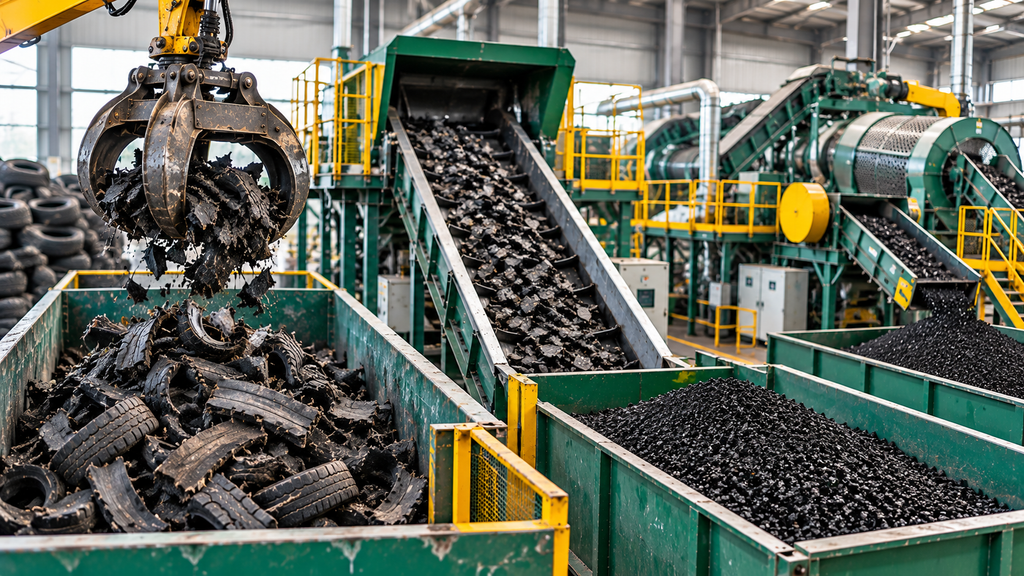
At a recycling facility, tyres can be processed to recover useful materials. Rubber can be converted into products such as crumb, granules and finer rubber powder, while other components can be separated during processing.
This means businesses should compare the cost to recycle tyres alongside the service being provided.
A low-cost pickup may not be comparable with a full recycling service that includes processing, material recovery and compliance documentation.
For businesses that also purchase recycled rubber, the process becomes even more relevant. Waste tyres can become a source of recovered material for applications such as construction, landscaping, sports surfaces and other uses.
Is There a Standard Price for Commercial Tyre Disposal?
No.
There is no single Australia-wide commercial price that every business should expect to pay.
Searches for questions such as “How much does it cost to scrap a tyre?” can make it appear that there should be a simple answer. In practice, a quote needs to reflect the specific collection and processing requirements.
For example, a quote for 100 passenger tyres in metropolitan Melbourne should not automatically be compared with the price for a smaller collection of heavy commercial tyres from a regional location.
The services included can also vary.
One provider may quote collection only, while another may include transport, processing, recycling and documentation.
For this reason, businesses should always ask what is included in the quoted price.
What About Tyre Disposal Costs in NSW?
NSW businesses have additional regulatory considerations when managing waste tyres.
The NSW EPA states that waste tyres must be transported to a place that can lawfully accept them. It also requires certain waste-tyre movements to be tracked using the Integrated Waste Tracking Solution (IWTS). For movements within NSW, the tracking threshold includes loads of 20 or more tyres or 200 kg or more in a single load.
This matters when comparing quotes because responsible disposal is about more than the amount charged for collection.
Businesses should know where their tyres are going and keep appropriate records. The NSW EPA specifically advises businesses to retain information about the transporter and receiving facility, including relevant records such as dockets or receipts.
Therefore, if you operate in NSW, ask potential providers how they handle the applicable tracking and documentation requirements.
Does TSA Accreditation Affect Disposal Pricing?
Tyre Stewardship Australia operates the national Tyre Product Stewardship Scheme, which supports improved management and recycling of end-of-life tyres.
TSA accreditation does not create a standard disposal price. However, accreditation can be one factor businesses consider when assessing potential tyre-management providers.
It is worth looking beyond the quoted figure and asking:
- Is the provider appropriately accredited?
- Where are the tyres processed?
- What happens to the recovered materials?
- What documentation is supplied?
- Can the provider explain its compliance process?
These questions can help businesses distinguish between a simple waste-removal service and a more complete recycling arrangement.
The Australian Government’s current Product Stewardship Priority List continues to include tyres, reinforcing the importance of improved end-of-life management and resource recovery.
What Should a Commercial Tyre Disposal Quote Include?
Before accepting a quote, check what you are actually paying for.
Collection and transport
Does the quoted amount include pickup from your premises and transport to the processing facility?
Loading and handling
Will the collection team handle the tyres, or are they expected to be prepared by your staff?
Processing and recycling
Are the tyres being recycled, and can the provider explain what happens after collection?
Compliance documentation
Will you receive collection records, waste-tracking information or other documentation relevant to your business?
Collection frequency
Is the price for one collection or an ongoing arrangement?
Special requirements
Are additional charges possible for oversized tyres, difficult access, regional locations or unusual loads?
Getting clear answers to these questions allows you to compare quotes on a like-for-like basis.
How Can Businesses Manage Tyre Disposal Costs More Efficiently?
Reducing your overall waste-management cost does not necessarily mean choosing the lowest price.
Instead, focus on making the collection process efficient.
Track your tyre volumes
Keep a simple record of how many tyres your business generates each month. This gives you useful information when negotiating an ongoing collection arrangement.
Plan collections around your turnover
If your business generates a predictable volume, a scheduled collection may be easier to manage than repeated urgent pickups.
Keep tyres accessible
An organised storage area can make loading faster and reduce unnecessary handling.
Tell the provider about unusual tyres
If your business handles truck, agricultural, earthmoving or other large tyres, mention this when requesting the quote.
Keep your waste records
Documentation can be important for internal reporting and, depending on the jurisdiction and circumstances, regulatory compliance.
Questions to Ask Before Choosing a Tyre Recycling Provider
Before agreeing to a commercial tyre disposal arrangement, ask:
- How is the price calculated?
- Is the quote based on tyre numbers, weight, volume or a combination?
- Does the price include collection and transport?
- Are there minimum collection quantities?
- Can collections be scheduled regularly?
- Where will the tyres be processed?
- What happens to the recovered rubber?
- What compliance documentation will I receive?
- Does the provider hold relevant accreditation?
- Are there additional charges for location, access or tyre type?
The answers can tell you considerably more than a headline price.
Practical Takeaways for Australian Businesses
When researching tyre disposal cost Australia options, keep these points in mind:
- There is no universal commercial tyre disposal price.
- Tyre volume can affect collection efficiency.
- Larger and specialist tyres may require different handling.
- Location affects transport requirements.
- Collection frequency should match your normal tyre turnover.
- Difficult site access can affect collection time and cost.
- Recycling and processing are part of the overall service.
- NSW has specific waste-tyre tracking requirements for qualifying loads.
- TSA accreditation can be one factor when evaluating a provider.
- Documentation and traceability should be considered alongside price.
- The most reliable way to determine your actual cost is to request a quote based on your specific requirements.
Frequently Asked Questions
What is the disposal fee for tyres in NSW, Australia?
There is no single commercial tyre disposal fee that applies to every NSW business. Pricing can vary according to tyre type, volume, location, transport and processing requirements. NSW businesses must also comply with applicable waste-tyre transport and tracking requirements.
Is tyre recycling profitable?
The economics of tyre recycling depend on factors such as collection costs, processing technology, transport, recovered material quality and demand for recycled rubber products. For businesses generating waste tyres, the more immediate concern is finding a reliable and compliant recycling pathway.
How much does it cost to scrap a tyre?
There is no universal commercial price per tyre. The provider may consider the number and type of tyres, collection location, transport requirements, site access and collection frequency when preparing a quote.
What should businesses do with old tyres in Australia?
Businesses should arrange collection through an appropriate waste-tyre collector or recycling provider and ensure the tyres are taken to a lawful destination. Requirements vary between jurisdictions, so businesses should also maintain the appropriate records.
What information should I provide when requesting a tyre disposal quote?
Provide your business location, approximate number of tyres, tyre types and sizes, how frequently tyres accumulate, and any site-access or loading restrictions. This gives the provider enough information to prepare a more accurate commercial quote.
Conclusion
The tyre disposal cost Australia businesses pay depends on the details of the job. Volume, tyre type, location, collection frequency, site access, transport, processing and compliance can all influence the final quote.
For that reason, businesses should avoid relying on a generic price per tyre. Instead, provide accurate information about your waste stream and compare the complete service being offered, including collection, recycling and documentation.
If you are looking for a commercial tyre recycling solution, start by preparing your approximate tyre volume, tyre types, collection location and preferred collection frequency. Providing these details to a qualified recycling provider can help ensure the disposal requirements are assessed accurately and a suitable commercial quote can be prepared.