Every year, millions of tyres reach the end of their life across Australia.
Without proper recycling systems, these tyres can quickly become a major environmental problem — contributing to landfill overflow, illegal dumping, pollution, and fire hazards.
Fortunately, tyre recycling Australia initiatives are helping transform waste tyres into valuable reusable materials that support sustainable industries and greener infrastructure.
As environmental awareness continues growing, tyre recycling is becoming one of the most important solutions for reducing industrial waste and building a cleaner future.
Why Waste Tyres Are an Environmental Concern
Tyres are designed to be highly durable and long-lasting.
While this is essential for vehicle performance and safety, it also means tyres take decades to break down naturally after disposal.
Improperly discarded tyres can create serious environmental issues including:
- Landfill overflow
- Toxic chemical leakage
- Soil contamination
- Water pollution
- Illegal dumping
- Air pollution from tyre fires
Large tyre stockpiles are especially dangerous because tyre fires can burn for long periods and release harmful emissions into the atmosphere.
How Tyre Recycling Helps Reduce Landfill Waste
One of the biggest environmental benefits of tyre recycling is reducing pressure on landfill systems.
Tyres occupy significant landfill space because of their size and durability.
By recycling tyres instead of disposing of them in landfill, Australia can:
- Reduce waste accumulation
- Improve landfill efficiency
- Lower long-term environmental risks
- Support sustainable waste management practices
This is becoming increasingly important as Australia continues focusing on cleaner and more sustainable waste solutions.
Preventing Illegal Tyre Dumping
Illegal dumping remains a major environmental issue in many regions.
Discarded tyres dumped in bushland, industrial zones, and rural areas can:
- Damage ecosystems
- Create pollution
- Increase fire risks
- Harm wildlife
- Lead to expensive cleanup operations
Professional tyre recycling services help businesses and communities dispose of tyres responsibly while supporting environmental compliance.
Reducing Pollution Through Recycling
When tyres are burned illegally or left exposed in unsuitable environments, they can release harmful pollutants into the air, soil, and water systems.
Tyre recycling helps reduce:
- Air pollution
- Soil contamination
- Groundwater pollution
- Greenhouse gas emissions
Modern recycling facilities use environmentally responsible processing methods to recover materials safely and efficiently.
Conserving Natural Resources
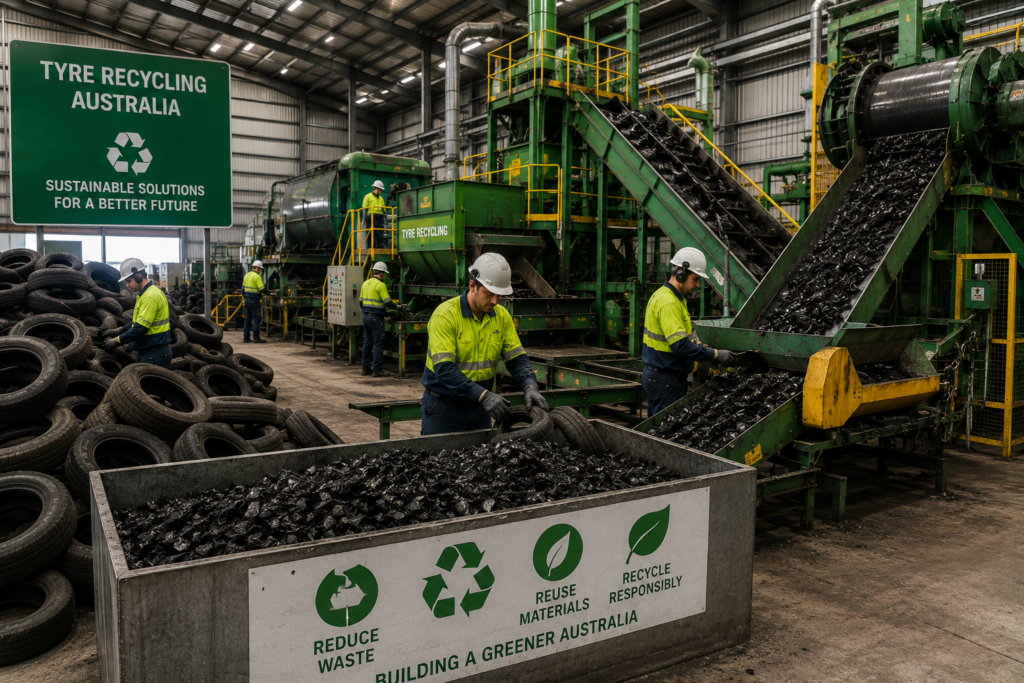
Tyre recycling supports resource conservation by reducing the need for virgin raw materials.
Recovered rubber materials can be reused in:
- Playground flooring
- Sports surfaces
- Road construction
- Industrial products
- Construction materials
This helps industries reduce resource consumption while supporting sustainable manufacturing systems.
Supporting Australia’s Circular Economy
Tyre recycling plays an important role in Australia’s transition toward a circular economy.
Instead of treating tyres as waste, recycling transforms them into reusable materials with long-term value.
This supports:
- Sustainable production
- Resource efficiency
- Waste reduction
- Material recovery
- Environmental innovation
Circular economy systems help reduce environmental impact while improving long-term sustainability outcomes.
Recycled Tyres Are Creating Sustainable Infrastructure
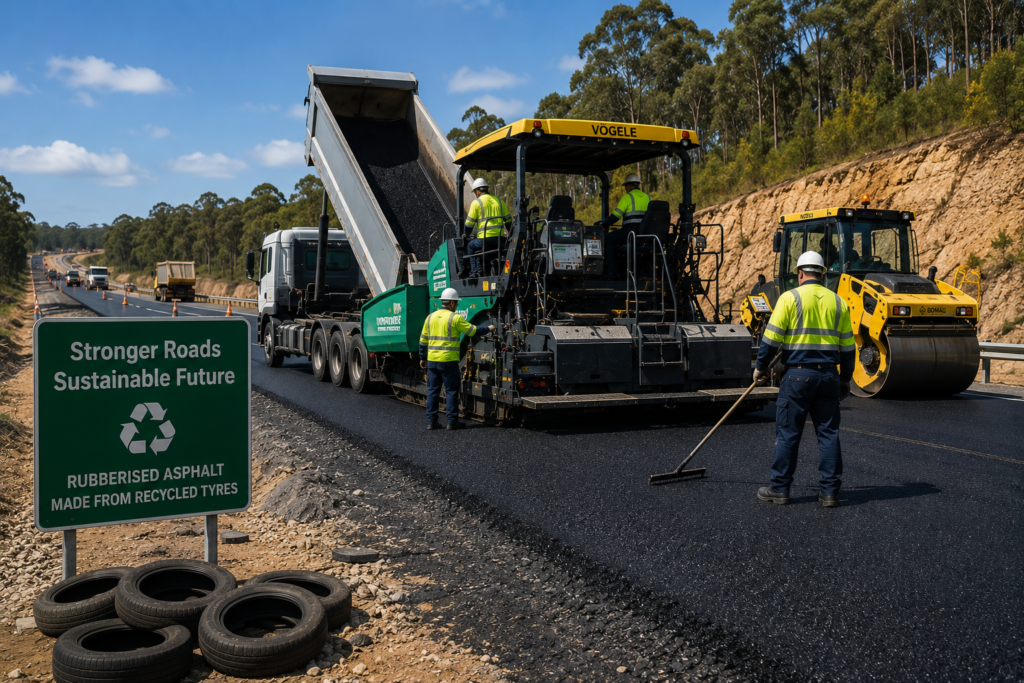
Recycled tyre materials are increasingly being used in sustainable infrastructure projects across Australia.
Applications include:
- Rubberized asphalt roads
- Sports tracks
- Playground safety surfaces
- Industrial flooring
- Civil engineering materials
These projects demonstrate how waste tyres can become valuable resources for modern infrastructure development.
Lowering Carbon Emissions
Manufacturing products from recycled rubber often requires less energy compared to producing new raw materials from scratch.
This can help reduce:
- Industrial energy consumption
- Carbon emissions
- Manufacturing waste
- Environmental footprint
For businesses and industries focused on sustainability goals, tyre recycling supports broader environmental performance initiatives.
Why Businesses Are Prioritizing Sustainable Waste Management
Australian businesses are under increasing pressure to improve environmental practices.
Customers, investors, and government agencies are paying closer attention to:
- ESG performance
- Environmental compliance
- Sustainability reporting
- Waste reduction initiatives
Sustainable tyre recycling helps businesses demonstrate environmental responsibility while reducing operational risks.
The Future of Tyre Recycling in Australia
Australia’s recycling sector is continuing to evolve rapidly.
Growing investment in:
- Sustainable infrastructure
- Circular economy systems
- Green manufacturing
- Environmental innovation
is increasing demand for recycled tyre materials and responsible recycling solutions.
As industries continue prioritizing sustainability, tyre recycling will remain an important part of Australia’s environmental future.
Conclusion
Tyre recycling is helping Australia reduce waste, lower pollution, conserve resources, and build more sustainable industries.
By transforming waste tyres into valuable reusable materials, recycling supports cleaner communities, greener infrastructure, and long-term environmental responsibility.
For businesses, councils, and industries, investing in sustainable tyre recycling solutions is an important step toward building a cleaner and more sustainable future for Australia.
Frequently Asked Questions
Why is tyre recycling important for the environment?
Tyre recycling helps reduce landfill waste, prevent pollution, conserve resources, and support sustainable manufacturing practices.
What happens if tyres are not recycled?
Improperly discarded tyres can contribute to landfill overflow, illegal dumping, pollution, and fire hazards.
What products are made from recycled tyres?
Recycled tyres are used in roads, playgrounds, sports surfaces, industrial flooring, and construction materials.
Does tyre recycling reduce carbon emissions?
Yes. Recycling materials often uses less energy compared to manufacturing new raw materials, helping reduce emissions.
How does tyre recycling support sustainability?
Tyre recycling supports sustainability by reducing waste, conserving resources, and promoting circular economy systems.