Australia generates millions of end-of-life tyres every year.
Without proper recycling systems, these tyres can become a major environmental challenge, contributing to landfill waste, illegal dumping, and pollution.
Fortunately, tyre recycling is helping transform this waste into valuable resources.
By converting used tyres into reusable materials, recycling companies are supporting sustainable infrastructure, reducing environmental impact, and helping Australia move towards a circular economy.
What Is Tyre Recycling?
Tyre recycling is the process of collecting, processing, and converting used tyres into reusable materials.
Instead of sending tyres to landfill, recycling facilities recover valuable materials such as:
- Recycled rubber
- Rubber crumb
- Steel
- Textile fibres
These materials can then be used in various industries and applications.
The goal is to reduce waste while maximizing resource recovery.
Why Waste Tyres Are an Environmental Concern
Tyres are extremely durable products designed to withstand harsh conditions.
However, this durability also makes them difficult to dispose of.
Environmental Risks Include:
- Landfill overcrowding
- Illegal dumping
- Fire hazards
- Soil contamination
- Water pollution
- Mosquito breeding sites
Improper tyre disposal can create long-term environmental challenges for communities and businesses.
Where Do Waste Tyres Come From?
Millions of tyres reach the end of their lifecycle every year.
Common Sources Include:
- Passenger vehicles
- Commercial fleets
- Transport companies
- Construction equipment
- Mining vehicles
- Agricultural machinery
Proper collection and recycling are essential to ensure these tyres do not become environmental hazards.
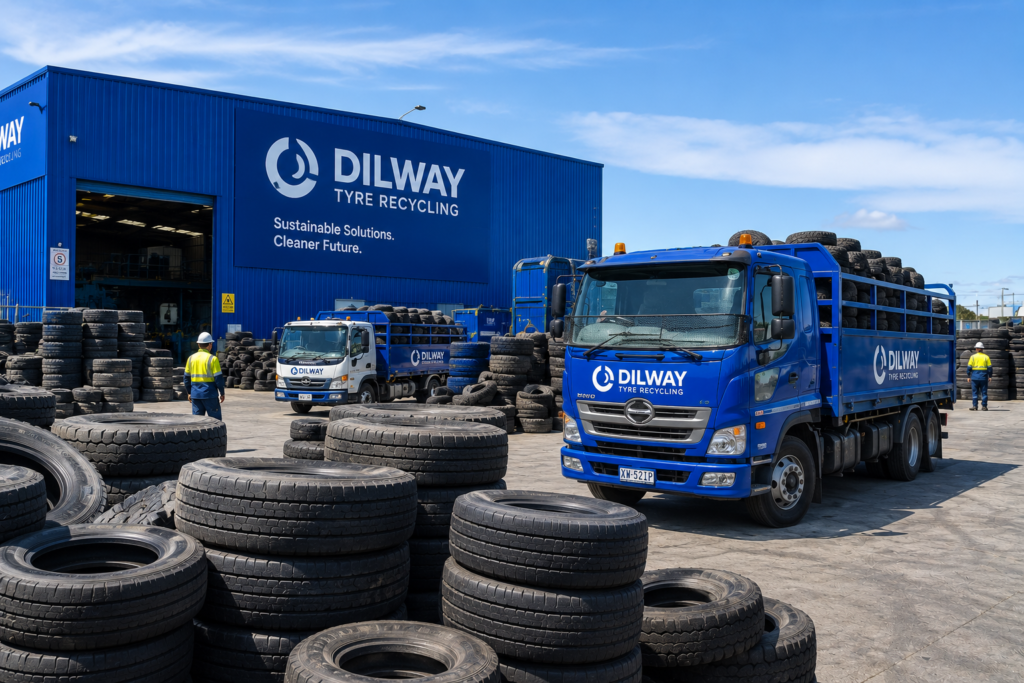
The Tyre Recycling Process
Modern recycling facilities use advanced equipment to recover valuable materials from used tyres.
The process generally includes:
- Collection
- Inspection
- Sorting
- Shredding
- Steel separation
- Fibre removal
- Rubber processing
The recovered materials are then supplied to industries across Australia.
What Happens to Recycled Tyres?
Many people are surprised by the wide range of products created from recycled tyres.
Common Applications Include:
- Playground flooring
- Sports surfaces
- Road construction
- Industrial flooring
- Construction materials
- Landscaping products
These applications help extend the lifecycle of valuable materials while reducing waste.

Environmental Benefits of Tyre Recycling
Tyre recycling provides significant environmental advantages.
Reduced Landfill Waste
Recycling diverts millions of tyres away from landfill sites every year.
Lower Pollution Risks
Proper recycling helps reduce illegal dumping and environmental contamination.
Resource Conservation
Recovered rubber and steel can be reused instead of extracting new raw materials.
Circular Economy Support
Tyre recycling keeps valuable materials in use for longer, supporting sustainable resource management.
Economic Benefits of Tyre Recycling
Tyre recycling also creates economic opportunities.
Benefits include:
- Job creation
- Infrastructure development
- Sustainable manufacturing
- Local material supply chains
- Reduced disposal costs
As demand for recycled materials grows, recycling continues to support Australia’s green economy.
Why Businesses Should Support Tyre Recycling
Businesses are increasingly expected to demonstrate environmental responsibility.
Participating in tyre recycling programs can help organizations:
- Meet sustainability goals
- Improve ESG performance
- Reduce environmental impact
- Strengthen brand reputation
- Support circular economy initiatives
Responsible tyre management is becoming an important part of modern business operations.
The Future of Tyre Recycling in Australia
As sustainability becomes a national priority, tyre recycling will continue playing an important role.
Growing demand for:
- Sustainable infrastructure
- Recycled materials
- Green construction
- Circular economy solutions
is expected to drive further investment in recycling technologies and resource recovery.