Most people never think about what happens to a tyre after it’s replaced.
Once a tyre reaches the end of its life, it often disappears from sight — but not from the environment.
Every year, Australia generates millions of waste tyres from passenger vehicles, trucks, industrial machinery, and construction equipment. Without proper recycling systems, these tyres can become a major environmental challenge.
Fortunately, modern tyre recycling Australia solutions are changing the story.
Instead of ending up in landfill, waste tyres are now being transformed into valuable recycled materials used in roads, playgrounds, sports facilities, and industrial applications across the country.
Why Waste Tyres Are a Serious Environmental Issue
Tyres are designed to be durable, heat resistant, and long-lasting. While this makes them ideal for vehicles, it also makes them difficult to dispose of safely.
Improper tyre disposal can lead to:
- Landfill overflow
- Illegal dumping
- Fire hazards
- Soil contamination
- Water pollution
- Increased carbon emissions
Tyre stockpiles are particularly dangerous because tyre fires can burn for long periods and release harmful pollutants into the environment.
For councils, businesses, and industries, responsible tyre disposal is becoming increasingly important for environmental compliance and sustainability goals.
What Happens After a Tyre Is Collected?
The tyre recycling process begins once tyres are collected from:
- Automotive workshops
- Fleet operators
- Construction companies
- Industrial facilities
- Waste management sites
The tyres are then transported to specialised recycling facilities for processing.
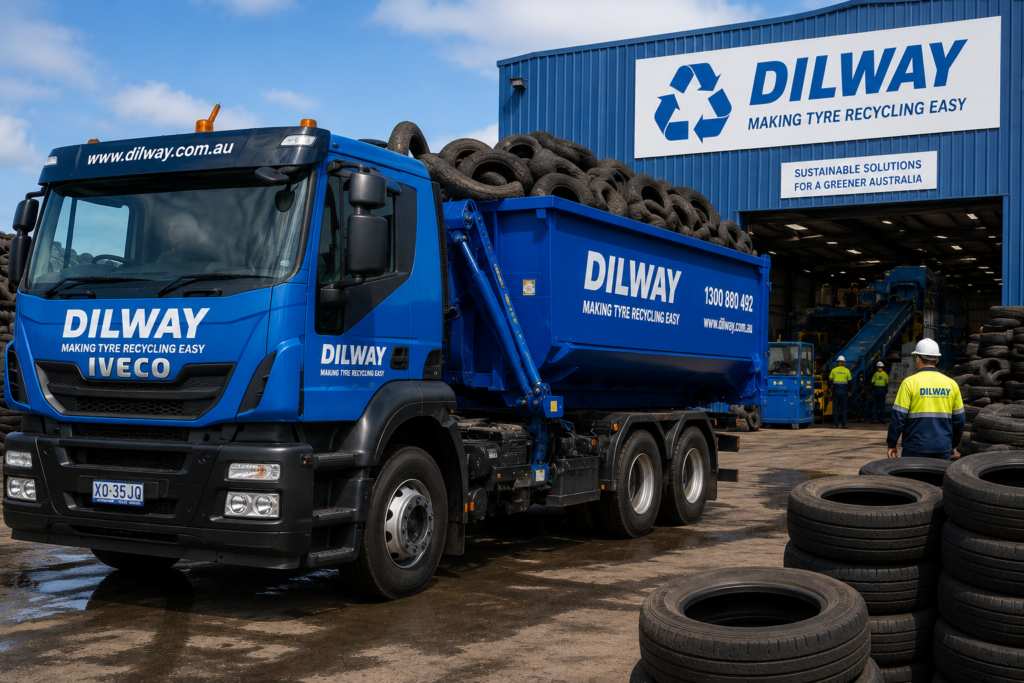
Step 1: Tyre Inspection and Sorting
At the recycling facility, tyres are inspected and sorted based on:
- Size
- Condition
- Material composition
- Potential for reuse
Some tyres may still be suitable for retreading or secondary use before full recycling.
Tyres that cannot be reused move to the next stage of processing.
Step 2: Tyre Shredding
Large industrial shredders break tyres into smaller rubber pieces.
During this process, recycling equipment separates:
- Rubber
- Steel
- Textile fibres
Each material can then be repurposed for different industrial uses.
This stage is essential because it transforms bulky waste tyres into manageable recyclable materials.

Step 3: Creating Recycled Rubber Products
After shredding and separation, the rubber is processed into products such as:
- Rubber crumb
- Rubber granules
- Recycled rubber mats
- Industrial rubber materials
These products are then supplied to industries across Australia.
Where Recycled Tyres Are Used
One of the biggest benefits of tyre recycling is that the materials can be reused in many industries.
Playground and Safety Surfaces
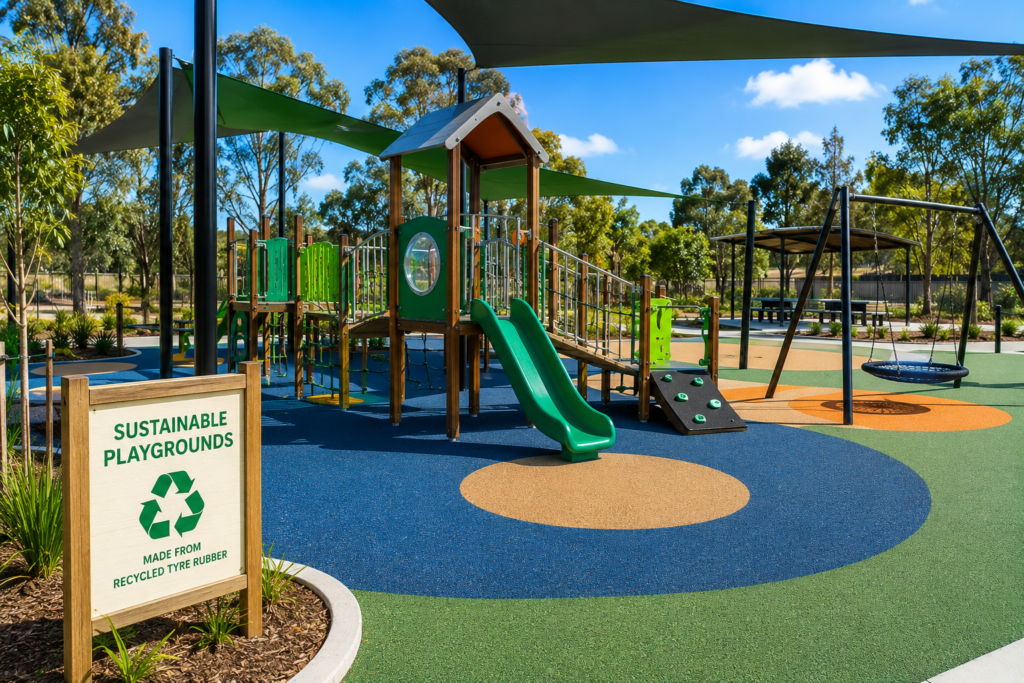
Recycled rubber is commonly used in playground flooring because it provides:
- Better shock absorption
- Slip resistance
- Safer surfaces for children
- Long-term durability
Many modern playgrounds now use recycled rubber safety flooring instead of concrete or hard surfaces.
Sports and Fitness Facilities
Sports facilities use recycled rubber for:
- Running tracks
- Artificial turf infill
- Gym flooring
- Multi-purpose courts
Rubber surfaces improve comfort, cushioning, and durability for athletes and users.
Road Construction and Infrastructure
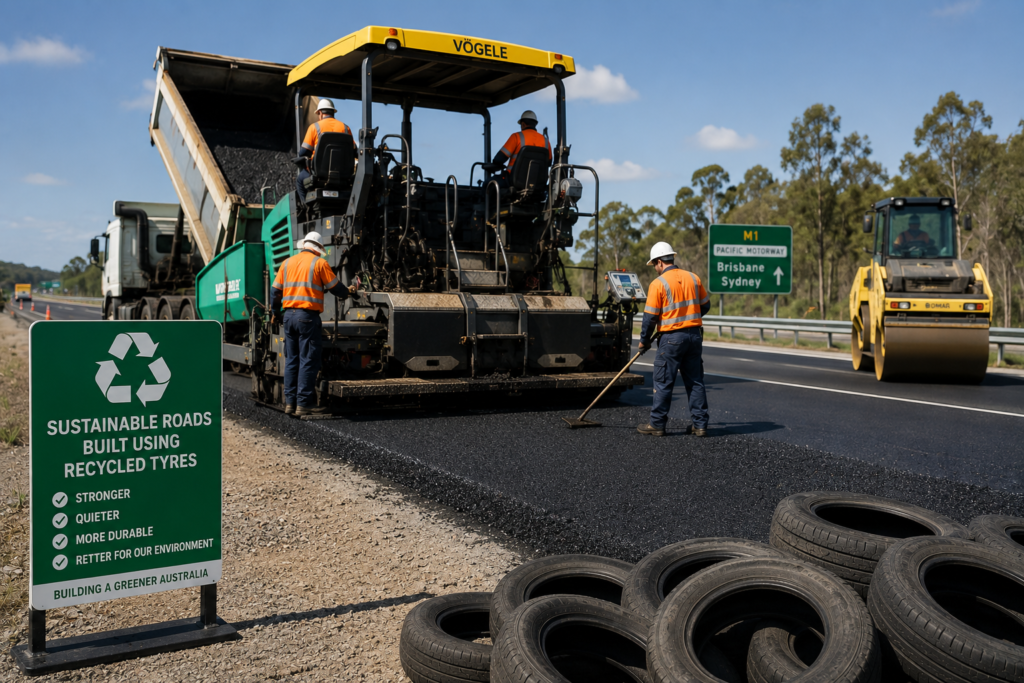
Recycled tyre rubber is increasingly being used in road construction materials across Australia.
Benefits include:
- Reduced road noise
- Improved flexibility
- Longer-lasting roads
- Better resistance to cracking
Sustainable infrastructure projects are helping increase demand for recycled rubber materials nationwide.
Industrial and Commercial Applications
Industries also use recycled rubber in:
- Industrial flooring
- Shock absorption systems
- Warehouse mats
- Construction barriers
- Insulation products
These applications reduce waste while supporting environmentally responsible manufacturing.
Environmental Benefits of Tyre Recycling
Tyre recycling offers major sustainability benefits for Australia.
Reduces Landfill Waste
Tyres take decades to break down naturally. Recycling helps reduce pressure on landfill systems.
Supports the Circular Economy
Waste tyres are transformed into reusable raw materials instead of being discarded.
Conserves Natural Resources
Recycled rubber reduces the need for virgin materials in manufacturing and construction.
Reduces Pollution Risks
Professional tyre recycling helps prevent illegal dumping and environmental contamination.
Why Sustainable Tyre Disposal Matters for Businesses
Businesses are increasingly prioritising sustainable waste management practices.
Responsible tyre recycling can help companies:
- Improve environmental compliance
- Support ESG initiatives
- Strengthen brand reputation
- Reduce environmental impact
- Demonstrate corporate responsibility
For construction companies, fleet operators, and industrial businesses, sustainable tyre disposal is becoming an important part of long-term environmental planning.
The Future of Tyre Recycling in Australia
Australia is moving toward a more sustainable and circular economy.
Growing investment in:
- Green infrastructure
- Sustainable construction
- Environmental innovation
- Circular manufacturing
is creating strong demand for recycled rubber products and tyre recycling services.
As industries continue focusing on sustainability, tyre recycling will play a critical role in reducing waste and supporting environmentally responsible growth.