What Happens If Your Business Illegally Dumps or Mismanages Waste Tyres?
Waste tyres can quickly become a problem for Australian businesses. Automotive workshops, tyre retailers, fleet operators and construction companies often generate more used tyres than they can store comfortably. When collections are delayed or disposal costs become a concern, it can be tempting to look for the cheapest and quickest way to get rid of them.
However, dumping tyres illegally, sending them to an unsuitable facility or allowing them to accumulate without proper management can create serious consequences. Understanding the penalties for illegal tyre dumping Australia businesses may face is important, but the risks go beyond fines. Businesses can also face clean-up expenses, regulatory investigations, operational disruption and damage to their reputation.
The good news is that these problems are largely avoidable. With appropriate storage, reliable collection arrangements, responsible recycling and proper documentation, businesses can manage waste tyres without turning a routine operating responsibility into a costly compliance issue.
What Counts as Illegal Tyre Dumping or Mismanagement?
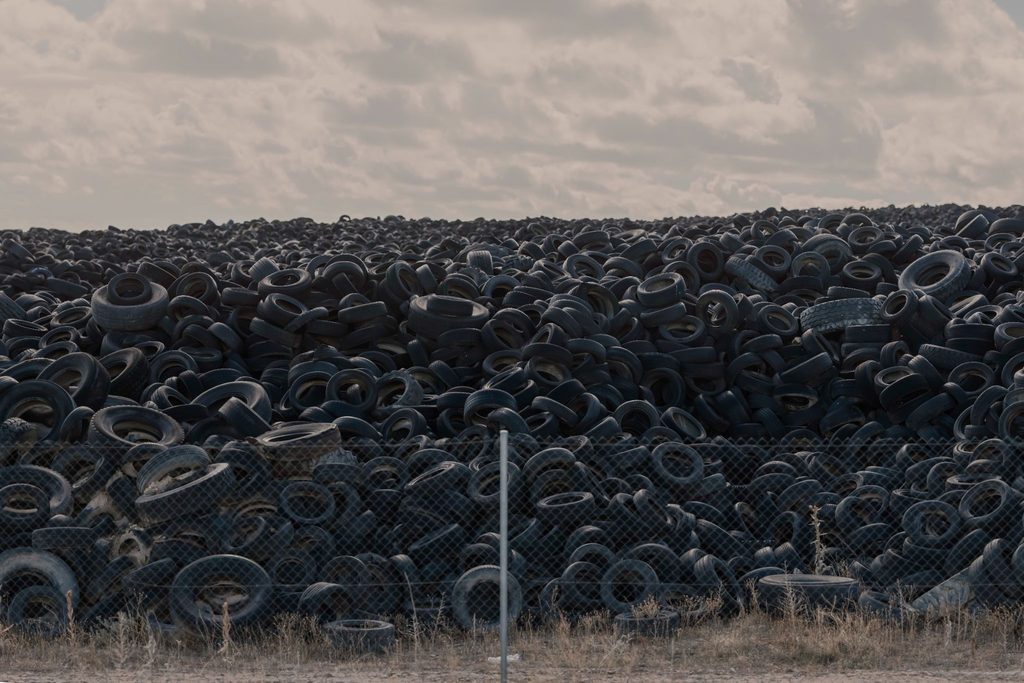
Illegal tyre dumping generally means abandoning or depositing waste tyres somewhere they are not legally permitted to go. This could involve leaving tyres on vacant land, dumping them beside roads, placing them in bushland or sending them to an unauthorised site.
For businesses, the issue can also arise through an external contractor. For example, a workshop might pay someone to collect its old tyres, believing the disposal is legitimate, only to discover later that the contractor has dumped them illegally.
Mismanagement is broader than dumping. It can include:
- Storing excessive quantities of tyres without required permissions.
- Allowing tyres to accumulate in unsafe conditions.
- Burning waste tyres.
- Sending tyres to a facility that cannot lawfully accept them.
- Failing to meet applicable waste tracking requirements.
- Providing incomplete or misleading waste disposal records.
- Using an unsuitable transporter or recycling arrangement.
A business does not necessarily break the law simply because it has waste tyres on its premises. The problem arises when storage, handling, transport or disposal fails to meet the requirements that apply to that activity and location.
What Are the Penalties for Illegal Tyre Dumping Australia Businesses Should Know About?
The penalties for illegal tyre dumping Australia businesses may face depend on the state or territory, the quantity of waste involved, the circumstances of the offence and whether environmental harm has occurred.
There is no single national fine that applies to every tyre dumping incident.
Environmental regulators and local authorities can use different enforcement measures, including infringement notices, clean-up directions, compliance notices and court proceedings. More serious cases involving pollution or significant environmental harm may attract additional consequences.
Queensland: Illegal Dumping Can Lead to Fines and Clean-up Orders
Queensland’s Waste Reduction and Recycling Act 2011 covers littering and illegal dumping offences. The legislation distinguishes between different volumes of deposited waste, with more serious consequences possible for larger-scale dumping.
Importantly, enforcement is not limited to issuing a fine. Authorities can also require the responsible person or business to arrange the collection, transportation, storage, treatment or disposal of dumped waste.
Businesses that fail to comply with a clean-up notice may face further penalties.
The Queensland Government’s illegal dumping legislation and penalties explains the relevant offences and enforcement options.
Other States Have Their Own Requirements
The same general principle applies across Australia, but the specific legislation and enforcement arrangements differ.
For example, NSW has offences relating to the unlawful transportation, acceptance and depositing of waste. Victoria prohibits dumping and burning waste tyres and classifies them as reportable priority waste. Western Australia also treats unauthorised waste abandonment as an offence.
Businesses operating across multiple states should not assume that a disposal arrangement acceptable in one jurisdiction automatically meets the requirements elsewhere.
Who Can Be Held Responsible for Illegally Dumped Tyres?
One common misconception is that a business has no further responsibility once its tyres leave the premises.
That is not a safe assumption.
Depending on the circumstances and applicable legislation, responsibility may extend to people involved in generating, transporting, accepting or unlawfully depositing waste.
Consider a tyre retailer that hires an inexpensive collection contractor. The contractor collects several hundred tyres but takes them to an unauthorised property instead of a legitimate recycling facility.
The retailer may face difficult questions:
- Who collected the tyres?
- Was the transporter suitable and authorised for the work?
- Where were the tyres supposed to go?
- Was the receiving facility legitimate?
- What evidence does the retailer have of the collection?
- Were the tyres actually recycled or disposed of lawfully?
The answers will matter when authorities investigate what happened.
This is why tyre disposal liability deserves attention when choosing a waste contractor. Businesses should not rely on verbal assurances alone. They should understand the collection and receiving arrangements and retain appropriate records.
What Are the Financial Consequences Beyond Illegal Tyre Dumping Fines?
For many businesses, the biggest financial impact may not be the initial fine.
An illegal dumping incident can create several additional expenses, some of which may continue long after the tyres have been removed.
1. Clean-up and transportation costs
If a business is directed to clean up illegally dumped tyres, it may need to organise labour, equipment, transport and lawful disposal.
A large tyre stockpile can be particularly expensive to remove because tyres are bulky and may require multiple collections.
2. Regulatory and legal expenses
An investigation may require management time, professional advice and assistance with responding to regulatory notices.
If the matter proceeds further, legal representation and related expenses can add to the overall cost.
3. Business interruption
A serious waste-management incident can distract employees and management from normal operations.
A workshop may need to reorganise its storage area, suspend certain activities or arrange urgent collections to address an unsafe site.
4. Insurance and contract complications
Environmental incidents can create questions about insurance coverage, contractual responsibilities and supplier arrangements.
Businesses should review their own insurance and commercial agreements rather than assume every waste-related incident will be covered.
5. Lost business opportunities
Customers, commercial partners and government procurement teams may take environmental compliance seriously.
A business associated with illegal dumping could find it harder to maintain customer confidence or meet supplier requirements.
The combined impact can be considerably more disruptive than the original cost of arranging proper tyre recycling.
What Is the Waste Tyre Stockpiling Risk?
Not every tyre stockpile is illegal. Businesses often need temporary storage space between collection dates.
However, allowing waste tyres to accumulate without proper controls can create a waste tyre stockpiling risk that goes beyond simply running out of room.
Fire hazards
Tyres are combustible, and large stockpiles can be difficult to manage if a fire starts.
Tyre fires can produce thick, hazardous smoke and may burn for extended periods. Firefighting and clean-up can also be complicated because tyres can retain heat and reignite.
Mosquitoes and pests
Discarded tyres can collect rainwater, creating potential mosquito breeding sites. Poorly managed storage areas may also attract vermin and other pests.
Environmental contamination
Tyre stockpiles exposed to weather, fire or poor site conditions can create environmental concerns. Depending on the circumstances, pollutants and firefighting runoff may affect surrounding land and waterways.
Storage and permission requirements
Some jurisdictions have specific thresholds for waste tyre storage.
For example, EPA Victoria identifies permission requirements for certain waste tyre storage activities, including storage volumes of 5 cubic metres or more. The exact permission depends on the relevant storage category and circumstances.
Businesses should check the EPA Victoria guidance on waste tyre management before allowing significant quantities to accumulate.
Can a Business Be Penalised for Using an Unauthorised Waste Contractor?
Yes, depending on the circumstances and the relevant legal obligations.
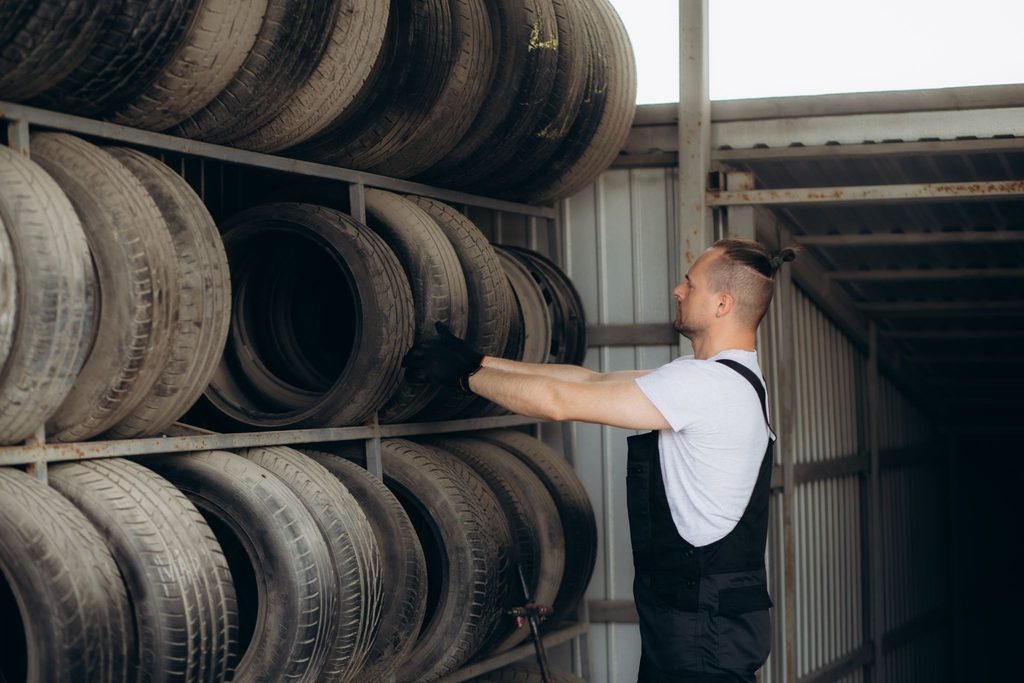
Choosing a contractor based only on the lowest collection price can create unnecessary risk. A provider might offer inexpensive removal but have no suitable receiving arrangement or fail to manage the tyres appropriately after collection.
A responsible business should check more than whether a contractor owns a truck.
Before agreeing to a collection, ask:
- What types of tyres can the provider accept?
- Where will the tyres be taken?
- Is the receiving facility authorised for the relevant activity?
- Does the provider hold relevant industry accreditation?
- What collection and disposal records will be supplied?
- Can the provider meet the waste tracking requirements that apply in your state?
TSA accreditation can be a useful part of this assessment, although it does not replace environmental licences, permissions or other legal obligations.
How Can Businesses Avoid Illegal Tyre Dumping Fines?
Preventing an incident is usually much easier than dealing with an investigation or clean-up order.
The most effective approach is to make tyre disposal part of your normal business operations.
Establish a regular collection schedule
Do not wait until tyres fill every available storage area.
Estimate how many tyres your business generates each week or month and arrange collections that suit your actual volume.
Use an appropriate recycling provider
Check the provider’s credentials, collection capabilities and downstream processing arrangements.
Businesses can explore professional tyre recycling and collection services to help manage commercial tyre volumes through an organised collection process.
Maintain safe storage areas
Keep tyres in designated areas and avoid unnecessary accumulation.
Consider fire prevention, access for collection vehicles, site security and any storage permissions that may apply.
Keep accurate documentation
Retain relevant information such as:
- Collection dates
- Approximate quantities collected
- Transporter details
- Receiving facility information
- Waste tracking records where required
- Recycling or disposal documentation
These records help establish what happened to the tyres after they left your premises.
Review contractors regularly
Do not assume that a provider remains suitable indefinitely.
If your tyre volumes increase, you move premises or environmental requirements change, review the collection arrangement.
What Should You Do If Your Business Has Already Mismanaged Waste Tyres?
If you discover that tyres have been dumped, stored incorrectly or sent to an unsuitable destination, ignoring the issue is unlikely to help.
Start by understanding what has happened and taking reasonable steps to prevent further problems.
1. Stop the problematic activity. If tyres are being sent through an unsuitable contractor or disposal pathway, pause that arrangement while you investigate.
2. Establish the facts. Identify the tyre quantities, collection dates, contractors involved and known receiving locations.
3. Preserve your records. Keep invoices, collection documents, messages, transport details and any relevant photographs.
4. Address immediate site risks. If tyres are creating a fire, safety or environmental concern, arrange appropriate professional assistance.
5. Seek advice where necessary. Contact the relevant environmental regulator or obtain professional environmental or legal advice if you may have breached a requirement.
6. Arrange a compliant solution. Establish a suitable collection and recycling pathway and improve the process that allowed the problem to occur.
If a regulator issues a notice, pay close attention to the stated requirements and deadlines. Do not assume that removing some tyres will automatically resolve the matter.
What Are the Alternatives to Illegal Tyre Disposal?
Businesses do not need to choose between expensive storage and unlawful dumping.
There are legitimate ways to manage end-of-life tyres, although availability and costs depend on location, tyre type and quantity.
Professional commercial tyre collection
A commercial collection provider can arrange regular removal from workshops, retailers, depots and other business premises.
For businesses generating consistent volumes, scheduled collections can make storage easier to manage and reduce the temptation to delay disposal.
Tyre recycling and resource recovery
Instead of treating every old tyre as rubbish, recycling facilities can process tyres into useful materials.
These may include rubber crumb, granules, shred and recovered steel.
Businesses looking for rubber crumb and granules for commercial applications can explore how recovered tyre materials can enter new manufacturing and infrastructure applications.
Local council and retailer options
Households may have access to council waste facilities, community recycling programs or tyre retailer collection arrangements.
However, free disposal is not universally available, and commercial quantities are often treated differently from household waste.
People Also Ask: Common Questions About Waste Tyre Disposal
What Is the Penalty for Illegal Dumping in Queensland?
Queensland penalties depend on the volume and nature of the waste, whether the offender is an individual or corporation, and the circumstances of the offence. Authorities may issue fines, require clean-up action or pursue court proceedings. Businesses should consult current Queensland Government guidance rather than rely on outdated penalty figures.
How Can You Get Rid of Old Tyres for Free in Australia?
There is no nationwide guarantee of free tyre disposal. Some councils, retailers or community recycling programs may offer collection or drop-off options, sometimes with limits on quantities or tyre types. Commercial businesses should check whether the service accepts business-generated tyres before relying on it.
How Much Is a Scrap Tyre Worth?
A scrap tyre does not have one standard value across Australia. Its potential value depends on tyre type, condition, quantity, transport costs and the market for recovered materials. Some businesses may pay for collection rather than receive payment because processing and transport involve costs. Scrap value should not be confused with the value of processed rubber crumb or granules.
Is It Illegal Not to Have a Spare Tyre in Australia?
Generally, Australian motorists are not required to carry a spare tyre simply because they own or drive a vehicle. However, the tyres fitted to the vehicle must meet applicable roadworthiness and safety requirements. Drivers should also check vehicle manufacturer recommendations and any specific requirements relevant to their vehicle or operating conditions.
Practical Takeaways for Australian Businesses
If your business regularly generates waste tyres, keep these points in mind:
- Do not assume that handing tyres to a contractor removes every responsibility.
- Check that collection and receiving arrangements are appropriate.
- Avoid allowing waste tyres to accumulate unnecessarily.
- Understand the storage, transport and tracking rules in your state.
- Keep collection and disposal records.
- Consider TSA accreditation as part of supplier due diligence.
- Build regular recycling collections into your waste-management plan.
A consistent process is generally easier to manage than arranging emergency disposal whenever storage space runs out.
Conclusion
The penalties for illegal tyre dumping Australia businesses may face are only one part of the problem. Unauthorised disposal and poorly managed stockpiles can also lead to clean-up obligations, legal expenses, environmental harm, business disruption and reputational damage.
The sensible approach is to manage tyres before they become a problem. Use appropriate collection providers, store waste safely, understand state-specific requirements and maintain a clear record of where your tyres go.
For businesses looking to improve their commercial tyre management, Dilway provides tyre collection, transport, recycling and waste-management support across its Australian service areas. Establishing a suitable collection arrangement can help keep your premises organised while ensuring end-of-life tyres have a more responsible route forward.