What Is a Waste Tracking Report and Why Does Your Business Need One?
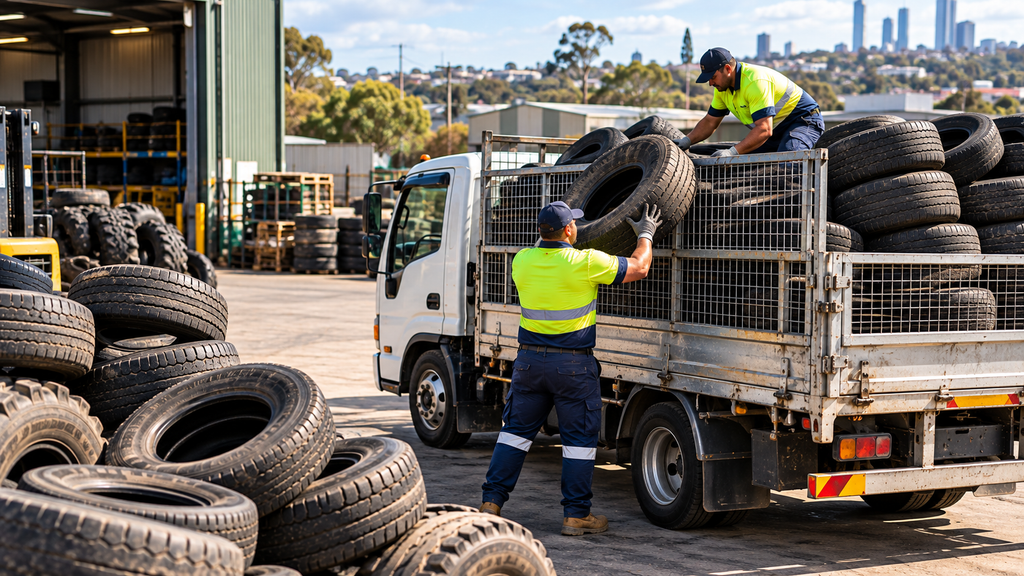
When a business hands over a load of used tyres, the job does not necessarily end when the collection truck leaves the site. For commercial tyre generators, there also needs to be a clear record of what was collected, where it went and how it was managed. This documentation can become particularly important when a business is dealing with environmental requirements, customer audits, internal compliance checks or sustainability reporting.
A waste tracking report tyres record can help create that chain of information. Depending on the state, waste type and collection arrangement, documentation may include details about the waste generator, transporter, quantity, waste classification, collection location and receiving facility. In some situations, the information forms part of an official government tracking system rather than simply being a private business record.
For Australian businesses, understanding this distinction matters. Waste tracking requirements are not identical across every state, and a commercial tyre recycler’s collection paperwork is not necessarily the same thing as an EPA tracking record. Knowing what documentation you should receive and retain can make tyre disposal easier to manage and much less stressful when someone asks for evidence later.
What Is a Waste Tracking Report for Tyres?
A waste tracking report is essentially documentation that helps establish the movement and management of waste from its source to its destination.
For a business generating waste tyres, the underlying information may show:
- Where the tyres came from
- What type of waste was collected
- The approximate quantity or weight
- Who transported the waste
- Where the waste was taken
- When the collection and delivery occurred
- What facility received the material
- Any relevant waste classification or tracking reference
The exact information depends on the jurisdiction and the type of waste being handled.
It is also useful to distinguish between a waste tracking record required by an environmental regulator and a commercial disposal or recycling report supplied by a recycling company. They can complement each other, but they are not automatically interchangeable.
For example, Victoria’s EPA Waste Tracker is an electronic system for tracking reportable priority waste. The system records transactions as waste changes hands between producers, transporters and receivers, and producers are required to create a waste record before the waste is transported.
Why Do Businesses Need Waste Tracking Documentation?
The simplest reason is accountability.
If your business generates hundreds of used tyres each year, it is not enough to know that someone collected them. You may need to demonstrate that the waste was transferred to an appropriate destination and handled through a legitimate disposal or recycling pathway.
That becomes particularly useful when your business is asked questions such as:
- Who collected your waste tyres?
- When were they collected?
- How many tyres were removed?
- Where were they taken?
- Which facility received them?
- Can you provide supporting documentation?
- Can you show that your waste was managed through an authorised pathway?
A clear audit trail for waste makes these questions much easier to answer.
It also reduces the risk of relying on memory, old invoices or informal collection arrangements to reconstruct what happened months later.
What Information Does a Waste Tracking Report Typically Include?
There is no single national template that applies to every commercial tyre collection.
However, businesses should expect documentation to contain enough information to connect the waste generator, collection and destination.
Business and collection details
This can include the name and address of the business generating the waste, collection date and collection location.
For companies operating multiple workshops, dealerships or depots, this is particularly important. A central office may manage waste contracts, but the actual tyres could be generated at several different sites.
Waste details
The report may identify the waste as tyres and include a quantity, weight or another measurement.
Victoria’s Waste Tracker, for example, uses Equivalent Passenger Units (EPU) as one way of measuring tyre quantities. EPA guidance explains that EPU converts different tyre sizes into a standard passenger-tyre equivalent.
Transport details
Documentation may identify the transporter responsible for moving the waste.
This creates an important link between the business that generated the tyres and the facility that ultimately received them.
Receiving facility
The destination is another critical part of the record.
Businesses should know where their waste tyres are going rather than simply handing them to an unknown contractor. NSW EPA specifically advises businesses to regularly check that their waste tyres are being taken to a lawful place and to keep written records demonstrating this.
What Is an EPA Waste Documentation Requirement?
The phrase EPA waste documentation can refer to several different types of records depending on the state and the waste being managed.
There is no single “EPA waste report” that every Australian business uses for every tyre collection.
Instead, each state has its own environmental legislation, systems and requirements.
NSW example
In NSW, waste tyre loads transported within the state must be tracked when they weigh 200 kg or more or contain 20 or more tyres in a single load. The NSW EPA uses the Integrated Waste Tracking Solution (IWTS) for these movements.
Importantly, this threshold should not be confused with a minimum number of tyres a recycler will collect. It is a regulatory tracking threshold for relevant NSW waste movements.
NSW businesses should also keep records showing that their waste tyres were taken to a lawful destination.
Victoria example
Victoria has its own Waste Tracker system. Waste tyres are classified as reportable priority waste, and businesses involved in generating, transporting or receiving relevant waste have specific duties.
This makes documentation particularly important for Victorian businesses that regularly generate commercial quantities of waste tyres.
The key lesson is simple: do not assume that a process used in one state automatically applies in another.
What Is a Tyre Disposal Compliance Report?
A tyre disposal compliance report is generally used to describe documentation that helps a business demonstrate how its waste tyres were managed.
It may include collection information, quantities, dates, transport details, destination information and other supporting records.
For businesses, this can be useful beyond government compliance.
A customer, landlord, auditor, certification body or corporate head office may ask for evidence that waste is being managed responsibly. Having organised records available can make that process considerably easier.
For example, a national retailer with multiple branches may want each location to maintain records of waste tyre collections. A fleet company may need documentation for an environmental management system. A council may require records as part of contractor or waste-management oversight.
The exact report required will depend on the organisation’s own policies and the regulatory obligations applying to the waste.
How Waste Tracking Helps During an Audit
Audits often become difficult when information is scattered.
One collection might be recorded on an invoice, another in an email, and another only in someone’s spreadsheet. If an auditor asks for twelve months of waste records, staff may have to search through multiple systems to reconstruct the history.
A consistent tracking process creates a much stronger audit trail for waste.
Ideally, records should allow someone who was not involved in the original collection to understand:
Waste generated → Collection arranged → Waste transported → Receiving facility → Supporting documentation
That chain can be especially valuable for businesses with multiple locations or different waste contractors.
It can also help identify gaps. If a business has collection invoices but no clear destination information, for example, it may want to improve its documentation process.
What About Tyre Recycling and TSA Accreditation?
Documentation is also relevant to the broader tyre stewardship system in Australia.
Tyre Stewardship Australia (TSA) operates the national Tyre Product Stewardship Scheme and has an accreditation framework for tyre businesses, including collectors and recyclers. Accredited participants have reporting obligations, with TSA requiring accredited participants to report tyre-related activity through its data reporting platform.
For businesses generating waste tyres, this provides another reason to consider the credentials and processes of the company collecting their tyres.
A recycler’s accreditation does not remove the waste generator’s own responsibilities, but choosing a provider with appropriate credentials and transparent documentation can help create a clearer waste-management trail.
For businesses interested in where collected tyres can ultimately be processed into recovered materials, rubber crumb and granules recycling is one example of how end-of-life tyres can be diverted into useful recycled rubber products.
Why Waste Tracking Matters for Tyre Storage
Good documentation is not only about what happens after collection.
Businesses also need to think about what happens while tyres are still on their premises.
Waste tyres are combustible, and poor storage can create serious fire and environmental risks. Victoria’s EPA requires businesses to manage waste tyres in ways that reduce the risk of harm and has specific requirements for certain quantities of tyres stored on site.
Victoria also requires an inventory and management plan in relevant circumstances so waste tyres do not simply build up on site.
Keeping collection records can therefore help a business understand how quickly tyres are accumulating and whether its collection schedule needs to change.
If the records show that a workshop is consistently storing large quantities before collection, for example, the business may need to review collection frequency or storage arrangements.
What Should Your Business Keep on File?
A practical waste documentation folder might include:
Collection records
Keep records of when tyres were collected, from which site and approximately how much was removed.
Transport information
Retain relevant transporter details and any applicable tracking references.
Destination records
Keep evidence of the receiving facility or recycling destination.
Invoices and service records
Commercial invoices can help support the collection history, but they should not necessarily be treated as the only evidence of responsible waste management.
Regulatory records
Where an EPA tracking system or other regulatory record applies, retain the required documentation according to the relevant rules.
Internal waste logs
For businesses with multiple sites, an internal spreadsheet or waste-management platform can provide a useful overview of collections across the organisation.
The aim is not to create unnecessary paperwork. It is to make the information easy to find when it is genuinely needed.
How to Make Waste Tracking Easier for Your Business
A few simple habits can significantly improve record keeping.
First, nominate someone responsible. Someone should know who manages waste documentation rather than assuming somebody else is keeping the records.
Second, standardise information across sites. If you operate five workshops, use the same basic fields for every location.
Third, keep documents together. Collection records, invoices, tracking information and destination details should be easy to retrieve.
Fourth, check discrepancies. If your internal records say 300 tyres were collected but the collection documentation shows a substantially different quantity, investigate the difference.
Finally, review records periodically. Do not wait until an audit to discover that information is missing.
Practical Takeaways for Australian Businesses
If your business regularly generates waste tyres, a useful documentation process should answer five basic questions:
- What waste was generated?
- Where did it come from?
- Who collected and transported it?
- Where was it taken?
- What evidence do we have that the transaction occurred?
The exact regulatory requirements depend on your state and circumstances. NSW has specific tracking thresholds for waste tyre loads, while Victoria operates its own Waste Tracker system for reportable priority waste.
That is why businesses should avoid treating a generic disposal certificate or invoice as automatically satisfying every regulatory requirement.
Instead, understand which records apply to your business and maintain a clear chain of documentation.
Frequently Asked Questions
Is a waste tracking report mandatory for every tyre collection?
Not necessarily. Requirements depend on the state, quantity, waste classification and circumstances of the movement. Some jurisdictions have specific tracking requirements for certain waste tyre loads.
What should a tyre disposal report contain?
It can include the generator’s details, collection date and location, tyre quantity or weight, transporter information, destination and relevant tracking or transaction references.
How long should businesses keep waste records?
The retention period can depend on the relevant state rules, licence or registration conditions and your business’s own compliance requirements. For example, certain Victorian waste storage permissions require specified waste movement records to be retained for five years.
Is an invoice enough to prove responsible tyre disposal?
An invoice can support your records, but it may not contain all the information required to demonstrate the complete movement of waste. Businesses should retain the relevant tracking and destination documentation as well.
Why is an audit trail important for waste?
An audit trail allows a business to demonstrate what happened to its waste from generation through collection and delivery. It can support regulatory compliance, internal reviews, customer requirements and environmental management processes.
Conclusion
Waste tracking documentation is more than paperwork sitting in a folder. For businesses that generate tyres regularly, it provides a practical record of where waste came from, who handled it and where it went.
A consistent waste tracking report tyres process can also make audits, compliance reviews and customer requests much easier to handle. The important point is to understand the requirements that apply in your state and maintain records that tell the complete story of your waste movements.
If your business needs a commercial tyre collection and recycling arrangement with supporting documentation, explore tyre collection and recycling services and discuss the reporting requirements that apply to your business and collection locations.