EPA Tyre Disposal Regulations in Australia: What Businesses Must Know
For Australian businesses, waste tyres are more than an unwanted by-product taking up space behind the workshop or warehouse. Once tyres reach the end of their usable life, how they are stored, transported and disposed of can create environmental, safety and compliance responsibilities.
Understanding EPA tyre disposal regulations Australia businesses need to consider can help prevent illegal dumping, poor storage practices, incomplete records and unnecessary compliance problems. The exact requirements can vary between states, so knowing the rules that apply to your location is important.
The good news is that responsible tyre disposal does not have to be complicated. By keeping waste tyres organised, using appropriate collection and recycling services, maintaining the right documentation and working with an authorised provider, businesses can manage end-of-life tyres more confidently.
What Are EPA Tyre Disposal Regulations in Australia?
There is not one single nationwide EPA rule that covers every aspect of waste tyre disposal. Environmental regulation is administered by individual states and territories, which means businesses need to follow the requirements that apply in their jurisdiction.
These requirements can cover several stages of tyre management, including:
- How waste tyres are stored
- How tyres are transported
- Where waste tyres can be taken
- Whether waste tracking is required
- What documentation must be maintained
- How large quantities of tyres can be stored
- Whether tyres can be sent to landfill
- Whether the receiving facility is authorised to accept the waste
This means that simply giving old tyres to a transport company does not automatically mean the disposal process is compliant. Businesses should consider where the tyres are going and whether the collection, transport and receiving arrangements meet applicable environmental requirements.
Why Are Waste Tyres Regulated?
Waste tyres can create environmental and safety risks when they are poorly managed.
Large tyre stockpiles can present significant fire risks, while illegally dumped tyres can become breeding areas for mosquitoes and create long-term waste-management problems. EPA Victoria, for example, classifies waste tyres as reportable priority waste and highlights the risks associated with tyre stockpiles and tyre fires.
Tyres also contain recoverable materials such as rubber and steel. Responsible recycling allows these materials to be processed for further use rather than simply being abandoned or unnecessarily sent to disposal.
For businesses, this makes proper waste management both a compliance consideration and an important part of responsible resource recovery.
Do Tyre Disposal Rules Differ Between States?
Yes. One of the most important things businesses should understand is that tyre waste laws Australia businesses must follow can differ depending on where the tyres are generated, transported and received.
NSW Waste Tyre Tracking
In New South Wales, specific tracking requirements apply to waste tyre loads transported within the state.
The NSW EPA states that consignors, transporters and receivers must track and report waste tyre loads weighing 200 kg or more, or containing 20 or more tyres, using the Integrated Waste Tracking Solution (IWTS).
This is particularly relevant to tyre retailers, automotive workshops, fleet operators and other businesses regularly generating commercial quantities of waste tyres.
Businesses operating in NSW should therefore understand when IWTS requirements apply and ensure the relevant parties complete their tracking responsibilities.
Victoria Waste Tyre Requirements
Victoria has its own set of requirements for managing waste tyres.
EPA Victoria states that waste tyres are reportable priority waste, with requirements covering transport, storage, receiving and disposal. Businesses storing waste tyres also need to consider whether their storage volume requires an EPA permission.
For example, EPA Victoria currently identifies:
- A09a for large waste tyre storage
- A09b for small waste tyre storage
A permission is required for storing 5 m³ or more of waste tyres, with specific thresholds applying to the different permission categories.
Victoria also has specific rules concerning tyre size and landfill. Waste tyres that cannot be reused need to be reprocessed at a suitable facility or shredded before landfill disposal, and tyres sent to landfill must be no larger than 250 mm.
Queensland Waste Tyre Requirements
Queensland manages waste through its Environmental Protection Act 1994 and Environmental Protection Regulation 2019.
Waste tyres are included in Queensland’s regulated waste tracking framework, with tyres identified under waste code T140. Waste generators, transporters and receivers can have obligations when regulated waste is handled.
Commercial transporters of regulated waste may also require an environmental authority, depending on the circumstances. The receiving facility must be appropriately authorised for the relevant waste-management activity.
For Queensland businesses, this means tyre disposal should be treated as a managed waste process rather than simply arranging an informal pickup.
Western Australia Waste Tyre Requirements
Western Australia has specific requirements governing used tyre transport and disposal. Current WA legislation continues to define a Tyre Landfill Exclusion Zone, while used tyres can also be subject to controlled-waste requirements depending on the circumstances.
Businesses in WA should therefore check the requirements that apply to their location and the intended destination before arranging disposal.
Because state regulations can change, businesses should always verify current requirements with the relevant state environmental regulator rather than relying on an old disposal practice.
What Does EPA-Compliant Tyre Recycling Mean?
EPA compliant tyre recycling generally means managing waste tyres in accordance with the environmental requirements that apply to the particular state, site and waste activity.
That can involve several stages:
- Identifying the waste tyres generated by the business.
- Storing them safely while waiting for collection.
- Using an appropriate transport or collection arrangement.
- Sending the tyres to a lawful receiving facility.
- Maintaining required waste tracking or disposal records.
- Ensuring the tyres are processed, recovered or disposed of appropriately.
The exact documentation and obligations vary by state.
For businesses looking for a structured way to manage commercial volumes, using professional tyre recycling and collection services is one practical option.
How Should Businesses Store Waste Tyres?
Good storage is an important part of tyre waste management.
Waste tyres should not simply be left in an open area indefinitely. Businesses should keep them organised and consider fire, environmental and site-safety risks.
EPA Victoria specifically identifies waste tyres as combustible waste and advises businesses to store them in a way that reduces the risk of harm, including considering the quantity stored and the circumstances of the site.
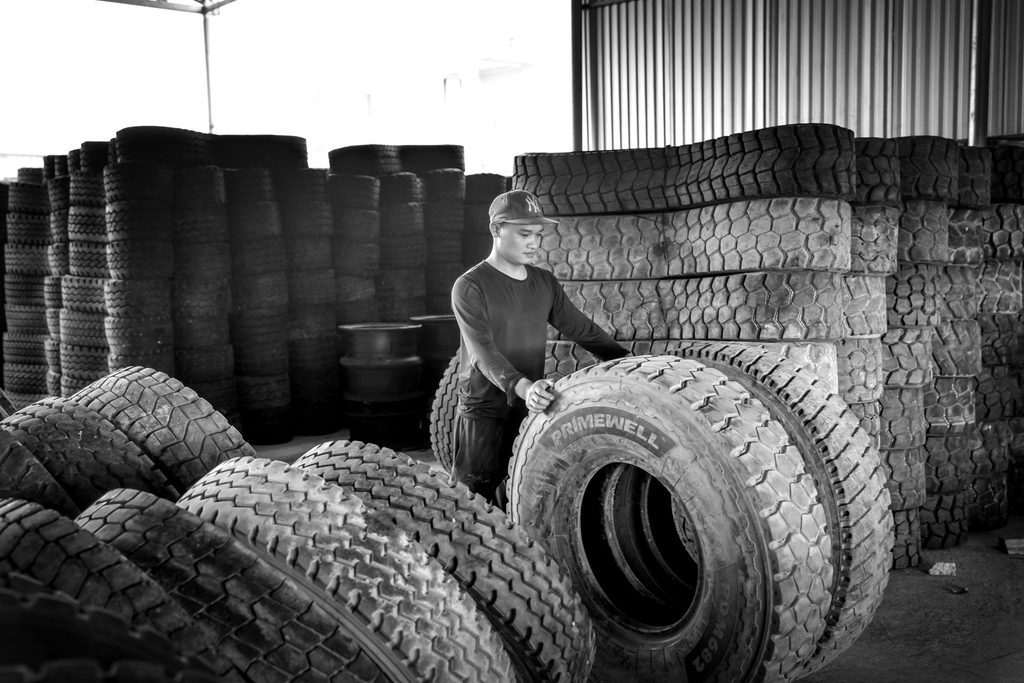
Practical measures can include:
- Keeping tyre storage areas organised
- Preventing unnecessary accumulation
- Maintaining clear access around stored tyres
- Reducing potential fire hazards
- Protecting tyres from conditions that could create additional environmental risks
- Arranging regular collection where appropriate
Businesses storing larger quantities should also check whether their state requires a specific licence, registration or other permission.
Are Old Tyres Allowed in Landfill?
This is not a simple nationwide yes-or-no question.
Landfill rules differ between jurisdictions, and some states place restrictions on how tyres can be disposed of or require tyres to be processed before landfill.
Victoria provides a clear example. EPA Victoria states that if waste tyres cannot be used, they need to be reprocessed at a suitable facility or shredded before landfill disposal, with tyres entering landfill required to be no larger than 250 mm.
However, landfill should not automatically be treated as the first disposal option. Businesses have a responsibility to consider available recovery and recycling pathways where applicable.
Recycling can recover useful tyre materials, including rubber and steel, and supports Australia’s broader tyre resource-recovery system.
What Should You Do With Old Tyres in Australia?
If you are wondering what to do with old tyres in Australia, the answer starts with identifying the type and quantity of tyres you have and the state where they are being managed.
For a business, a sensible process is:
1. Separate waste tyres from other waste
Keep tyres in a designated area rather than mixing them with general rubbish.
2. Estimate your tyre volume
Know approximately how many tyres you have and whether they are passenger, truck, earthmoving or other commercial tyre types.
3. Check your state’s requirements
Requirements can differ considerably between NSW, Victoria, Queensland, WA and other jurisdictions.
4. Arrange collection through an appropriate provider
A suitable commercial collection arrangement can help businesses manage transport and downstream recycling more systematically.
5. Keep the required records
Depending on your state and circumstances, this may include waste tracking information, collection records, disposal documentation or other compliance records.
6. Confirm where the tyres are going
A responsible waste-management process should provide confidence that the tyres are being taken to an appropriate destination rather than simply disappearing from the premises.
How Do You Dispose of Old Car Tyres?
For households, disposal options may include tyre retailers, local council services and approved waste facilities.
For businesses, the process is usually different because larger volumes may trigger additional transport, tracking, storage or documentation requirements.
If a workshop replaces dozens of tyres every week, for example, taking them to a general household waste facility may not be an appropriate long-term solution. A scheduled commercial collection can make the process easier to manage and can provide a more consistent record of what happens to the waste.
The key is to use a lawful disposal or recycling pathway that is appropriate for the quantity and location involved.
What Is the Legal Limit for Tyres in Australia?
There is no single national “legal limit” for how many waste tyres a business can possess.
Instead, limits and requirements can relate to storage volume, weight, number of tyres, transport arrangements and the specific state regulations.
For example, NSW tracking requirements apply to loads of 20 or more tyres or 200 kg or more.
Victoria has storage permission thresholds, while Queensland has regulated-waste tracking and transport requirements.
So if your business is asking whether there is a maximum number of tyres you can keep on-site, the answer depends on where you operate and how the tyres are stored.
What Should Businesses Know About TSA Accreditation?
Tyre Stewardship Australia (TSA) operates Australia’s voluntary Tyre Product Stewardship Scheme.
TSA accreditation provides formal recognition that participating businesses support responsible, transparent and environmentally sound tyre management. Accreditation is available to organisations including tyre retailers, collectors, recyclers, fleet operators and councils.
Businesses can use TSA’s accredited tyre collectors and recyclers search to identify participating providers.
It is important to understand that TSA accreditation and state EPA compliance are not the same thing. A business should still consider the environmental and waste-management requirements that apply in its particular state.
Why Waste Tracking and Documentation Matter
Waste documentation gives businesses an audit trail showing what happened to their waste.
This can become especially important when handling larger commercial quantities.
Recent enforcement action in Victoria demonstrates why record-keeping matters. In August 2026, EPA Victoria reported fines against two waste tyre companies after a failure to record the transport and delivery of 300 waste tyres in the EPA Waste Tracker system.
For businesses generating waste tyres, useful records may include:
- Collection dates
- Approximate tyre quantities
- Transport details
- Waste tracking information where required
- Receiving facility details
- Disposal or recycling documentation
- Other records required under applicable state rules
Keeping these records organised can make environmental reporting, internal audits and compliance checks much easier.
How Can Businesses Stay Compliant?
Rather than waiting until a tyre storage area becomes overloaded, businesses can build tyre disposal into their regular waste-management process.
A practical checklist is:
Know your waste: Understand the approximate quantity and types of tyres your business generates.
Know your state rules: Check the requirements that apply where your tyres are generated and transported.
Store tyres responsibly: Reduce fire, environmental and site-management risks.
Use appropriate collection services: Make sure the provider and receiving facility are suitable for the waste being handled.
Track where required: Complete state waste-tracking requirements when they apply.
Keep records: Retain relevant collection, transport and disposal information.
Review the arrangement regularly: If tyre volumes increase or your business expands into another state, reassess the disposal process.
For businesses generating regular commercial volumes, establishing a scheduled commercial tyre recycling and collection service can help make waste management more consistent.
Frequently Asked Questions
What are the EPA tyre disposal regulations in Australia?
There is no single national EPA tyre disposal rule. Each state and territory has its own environmental requirements covering areas such as storage, transport, tracking, recycling and disposal.
What should I do with old tyres in Australia?
Businesses should store old tyres safely, check the requirements in their state and arrange collection through an appropriate waste tyre recycler, collector or authorised waste facility.
How do you dispose of old car tyres?
Old car tyres can generally be managed through tyre retailers, approved waste facilities or professional collection and recycling services. Commercial quantities may have additional transport, tracking and documentation requirements.
What is the legal limit for tyres in Australia?
There is no single national limit. Requirements can depend on tyre quantity, weight, storage volume, location and the state in which the tyres are being managed.
Are tyres allowed in landfill?
Landfill rules vary by state. Some jurisdictions restrict tyre disposal or require tyres to be processed before landfill. Recycling and resource recovery should be considered where suitable alternatives are available.
Conclusion
Understanding EPA tyre disposal regulations Australia businesses need to follow is an important part of responsible waste management. The rules can differ between states, so businesses should avoid assuming that a disposal method that works in one location will automatically meet requirements elsewhere.
The most reliable approach is to keep tyres stored safely, use an appropriate collection and recycling pathway, complete any required waste tracking and maintain clear records. With a consistent process in place, businesses can reduce compliance risks while ensuring end-of-life tyres are managed responsibly.